Dreadnaught
Mariners' Museum, Uncurated Search Results
Type: Bugeye
Year: 1880
Builder:
Location: Nanticoke

These records are found in the online catalog of The Mariners’ Museum and Park in Newport News, Virginia. Uncurated search results are presented to give researchers and interested readers an idea of whether the museum’s archives contain information about this vessel and whether it may be worthwhile to visit the museum’s catalog search page for further investigation. Uncurated results may be inaccurate or incomplete.
Search mode: Exact Name. Search phrase(s): "Dreadnaught". Results returned: 40. Results displayed in this table: 40.
Use these buttons to send uncurated search results to your own app or text document for further research. First, check the box for any row, or click "Select All" then uncheck any rows. Then click "Show Selections". You can then copy your selections from the text box and past them into your app.
| Fetch? | Row ID | Media | Date | Vessel | Place | Related Places | Inscription/Marks | Subject | Notes | Archive Number |
|---|---|---|---|---|---|---|---|---|---|---|
| 1 | No image URL. | Battleships. | Discussion included. | LB64175 | ||||||
| 2 | No image URL. | United States. Navy–History. | From frigate to dreadnaught __ __compiled by Caroline Brownson Hart and Louise Powers Benesch, research editor | LB18979 | ||||||
| 3 | No image URL. | Battleships. | Discussion included. | LB106166 | ||||||
| 4 | No image URL. | port. | LB50331 | |||||||
| 5 | No image URL. | Plates. | LB60160 | |||||||
| 6 | No image URL. | NOTES: LP 200- LP 225 are part of a set of lithographs in colors on wove paper by Frederic Schiller Cozzens (American, 1846-1928). ADDITIONAL INFORMATION: See Kelley, J.D.Jerrold, "American Yachts", Chapter l and pg. 422. See also "The Old Print Shop Portfolio", Vol. I, No. 9, May 1942. | CL18636 | |||||||
| 7 | 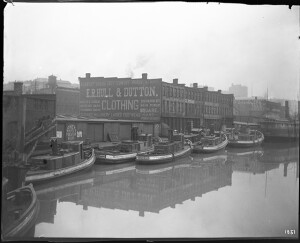 | 2/2/1896 | William Kennedy (Steamboat : 1893).; Joe Harris (Steamboat : 1873).; W. D. Cushing (Screw steamer : 1868).; Allie May (Steamboat : 1884).; H. L. Chamberlin (Steamboat : 1889).; Alva B (Steamboat : 1890).; Dreadnaught (Steamboat : 1881). | W.D. Cushing - (tug) Wm. Kennedy - (tug) Joe Harris - (tug) Allie May - (tug) Dreadnaught - (tug); 1851 | Steamboats–Ohio–Cleveland.; Tugboats–Ohio–Cleveland.; Harbors–Ohio–Cleveland. | Shows a view of seven tugboats moored together at a wharf. Stanton's notes place him at Cleveland, Ohio. Stanton's notebooks contain the following information about this item: "Feb. 2, 1896" | MS0094/01-#1851 | |||
| 8 | 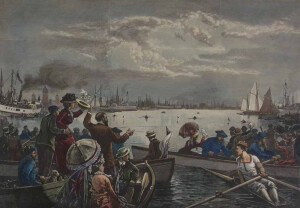 | SHORT DESCRIPTION: Hand colored wood engraving depicting a sculling match in Toronto Harbor. NOTES: This description was found on a print offered for sale by Alexandre Antique Prints: "Sculling, an international craze in the late nineteenth century, was a particular Canadian passion: Toronto's Ned Hanlan became the sport's first world champion in 1880. This enchanting view recreates a holiday on the water. Against the background of a crowded port, ladies and gentlemen take to a variety of boats to get a better view of the race." (Dreadnaught, 69). | CL16240 | |||||||
| 9 | 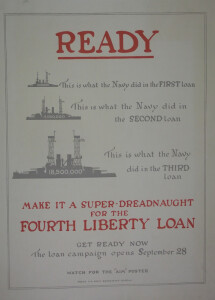 | FOURTH LIBERTY LOAN | CL13810 | |||||||
| 10 | No image URL. | NOTES: See the attached pamphlet by William King Covell, Wilkinson Press, Inc., Newport, Rhode Island, January 1955. The paper “The Steamer Commonwealth,” by Warren T. Berry and J. Howland Gardner, published by the Society of Naval Architects and Marine Engineers, New York, 1908, is the chief source of the notes in this leaflet. Information has been contributed by Elwin M. Eldredge and by other friends. This is the fourteenth of a series of leaflets devoted to steamboats of Long Island Sound. Four hundred copies were printed by the Wilkinson Press, Inc., of Newport, in the month of January 1955. See the attached article published in The New York Architect, published by The Harwell-Evans Company, New York, Vol. 2, July 1908, No. 7. It includes an editorial of the steamer Commonwealth and a discussion of the interior treatment, decoration and furnishing of the Commonwealth. It includes interior and exterior images of the boat and plans. VESSEL INFORMATION - VESSEL NAME: COMMONWEALTH VESSEL BUILT: 1908 SERVICE DATES: July 1, 1908-1937 VESSEL TYPE: SIDE-WHEEL STEAMBOAT SHIPBUILDERS: WILLIAM CRAMP & SONS BUILDERLOCATION: PENNSYLVANIA, PHILADELPHIA SHIP LINE: FALL RIVER LINE SHIP OWNER: NEW ENGLAND STEAM SHIP COMPANY VESSEL DIMENSIONS: 5,980 tons, 437'9" x 55' x 19'3" FATE: Scrapped in Baltimore, Maryland in 1938. VESSEL HISTORY: The Fall River Line became a division of the New England Navigation Company in 1906. [Description pulled from the Fall River Globe, June 23, 1908, page 8] The $2,000,000, four-decked, 456-foot long side-wheel steamboat Commonwealth was last vessel added to the line (1908). It was the largest of the sound steamer ever built (known as the ‘Giantess of the Sound’). Commonwealth’s interior decoration was created by Pottier and Stymus Company of New York and featured several different architectural styles, for example, a Louis XVI style dining room and the adjoining café in Italian Renaissance. The vessel could accommodate 2000. Some of the rooms “are of regal luxury, arranged in suites with baths.” The double-skilled hull was steel and divided into water-tight compartments. After of the lobby was a library, or social hall, fitted with mahogany bookcases decorated with gilded composition. The barber shop is in old ivory, gilded; the men’s café and the purser’s room off the quarter deck, are in oak ornamentation in color. The grand saloon in Venetian, Gothic vaulted, with artistic ornamentation and color decorations in each section of the vaulting. Aft of the grand salon and separated from by portieres is a Louis XV saloon in old ivory, and on the gallery deck above an Adams saloon in prima vera. Forward of the saloon deck is an Empire saloon in mahogany with gilded ornaments, and on the gallery deck a Louis XVI saloon in solid color with gilded ornamentations. The Commonwealth’s engines are of triple expansion inclined pattern, with no walking beam, with about 3000 horse-power. The paddle wheels are constructed with feathering buckets. On the night of September 26, 1908 the cargo ship Volund collided in dense fog with the Commonwealth off Race Rock off eastern Long Island, between Fisher’s Island and Plum Island. The Commonwealth rescued all 16 people from Volund. In a heavy fog in 1912, the Commonwealth rammed and badly dented the new armored dreadnaught New Hampshire. After the employees of the Fall River Line went on strike in the middle of 1937, the company chose, in the face of ongoing losses due to land transportation, to liquidate the company rather than negotiate with the union. The remaining vessels (Plymouth, Priscilla, Providence and Commonwealth) were sold for $88,000 and were towed to Baltimore and scrapped. | CL10564 | |||||||
| 11 | 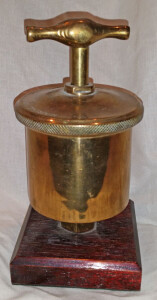 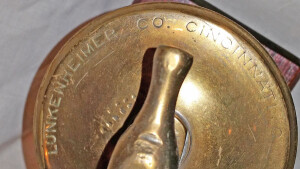 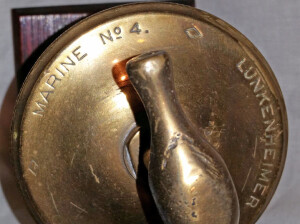 | NOTES: See the attached pamphlet by William King Covell, Wilkinson Press, Inc., Newport, Rhode Island, January 1955. The paper “The Steamer Commonwealth,” by Warren T. Berry and J. Howland Gardner, published by the Society of Naval Architects and Marine Engineers, New York, 1908, is the chief source of the notes in this leaflet. Information has been contributed by Elwin M. Eldredge and by other friends. This is the fourteenth of a series of leaflets devoted to steamboats of Long Island Sound. Four hundred copies were printed by the Wilkinson Press, Inc., of Newport, in the month of January 1955. See the attached article published in The New York Architect, published by The Harwell-Evans Company, New York, Vol. 2, July 1908, No. 7. It includes an editorial of the steamer Commonwealth and a discussion of the interior treatment, decoration and furnishing of the Commonwealth. It includes interior and exterior images of the boat and plans. NOTES: The Fall River Line was a famous and long-running passenger transportation service (1847–1937) that connected New York City and Boston via a combination of overnight steamboat travel along Long Island Sound (and Narragansett Bay) and rail connections. Passengers typically took a night boat from New York to Fall River, Massachusetts, then continued by train to Boston (or vice versa), making it a luxurious and popular "rail-water" route, especially during the Gilded Age. The company was founded by Richard Borden who began a regular steamboat service between New York City and Fall River in 1847 (the Bay State Steamboat Company/Bay State Line). In 1863 the Bay State Steamboat Company was sold to the Boston, Newport and New York Steamboat Company, and the railroad was extended between Fall River and Newport, Rhode Island. In 1869 the line was sold to the Narragansett Steamboat Company (Narragansett Steamship Company). In 1872 the Fall River Line was completely reorganized and became part of the Old Colony Railroad, under the name Old Colony Steamboat Company. In 1893, the Fall River Line became part of the New York, New Haven and Hartford Railroad (commonly called the New Haven Railroad). Under this railroad's influence, the steamboat operations (including the prominent Fall River Line) were reorganized and operated through the New England Navigation Company (organized January 1, 1905, the Fall River Line became a division in 1906). By the early 1910s (evidenced by references like 1913 stock certificates and reports), operations and marketing increasingly used New England Steamship Company (often abbreviated N.E.S.S. Co.). The shift to the new name likely occurred gradually between 1905 and 1910, with the name "New England Steamship Company" becoming the primary public and operational identity by the late 1900s/early 1910s. No single "renaming date" is pinpointed in primary sources, but the effective transition to the Steamship Company name for day-to-day branding and management was complete by around 1910–1912. The New England Steamship Company directly managed and marketed the Fall River Line's fleet of elegant side-wheel steamships (such as the Pilgrim, Priscilla, Puritan, Commonwealth, and Providence). After its employees went on strike in the middle of 1937, the company chose, in the face of ongoing losses due to land transportation, to liquidate rather than negotiate with the union. Vessels operated by the line: Bay State (1847), Massachusetts (1847), Empire state (1848), State of Maine (acquired 1849), Metropolis (1854), Old Colony (1865), Newport (1865), Bristol (1867, acquired 1869), Providence (1867, acquired 1869) Pilgrim (1883), City of Fall River (1883, freighter), City of Brockton (1886, freighter), Puritan (1889), Plymouth (1890; rebuilt 1906-1907), City of Taunton (1892, freighter), Priscilla (1894), Providence (1905), and Commonwealth (1908). VESSEL INFORMATION - VESSEL NAME: COMMONWEALTH VESSEL BUILT: 1908 SERVICE DATES: July 1, 1908-1937 VESSEL TYPE: SIDE-WHEEL STEAMBOAT SHIPBUILDERS: WILLIAM CRAMP & SONS BUILDERLOCATION: PENNSYLVANIA, PHILADELPHIA SHIP LINE: FALL RIVER LINE SHIP OWNER: NEW ENGLAND STEAM SHIP COMPANY VESSEL DIMENSIONS: 5,980 tons, 437'9" x 55' x 19'3" FATE: Scrapped in Baltimore, Maryland in 1938. VESSEL HISTORY: The Fall River Line became a division of the New England Navigation Company in 1906. [Description pulled from the Fall River Globe, June 23, 1908, page 8] The $2,000,000, four-decked, 456-foot long side-wheel steamboat Commonwealth was last vessel added to the line (1908). It was the largest of the sound steamer ever built (known as the ‘Giantess of the Sound’). Commonwealth’s interior decoration was created by Pottier and Stymus Company of New York and featured several different architectural styles, for example, a Louis XVI style dining room and the adjoining café in Italian Renaissance. The vessel could accommodate 2000. Some of the rooms “are of regal luxury, arranged in suites with baths.” The double-skilled hull was steel and divided into water-tight compartments. After of the lobby was a library, or social hall, fitted with mahogany bookcases decorated with gilded composition. The barber shop is in old ivory, gilded; the men’s café and the purser’s room off the quarter deck, are in oak ornamentation in color. The grand saloon in Venetian, Gothic vaulted, with artistic ornamentation and color decorations in each section of the vaulting. Aft of the grand salon and separated from by portieres is a Louis XV saloon in old ivory, and on the gallery deck above an Adams saloon in prima vera. Forward of the saloon deck is an Empire saloon in mahogany with gilded ornaments, and on the gallery deck a Louis XVI saloon in solid color with gilded ornamentations. The Commonwealth’s engines are of triple expansion inclined pattern, with no walking beam, with about 3000 horse-power. The paddle wheels are constructed with feathering buckets. On the night of September 26, 1908 the cargo ship Volund collided in dense fog with the Commonwealth off Race Rock off eastern Long Island, between Fisher’s Island and Plum Island. The Commonwealth rescued all 16 people from Volund. In a heavy fog in 1912, the Commonwealth rammed and badly dented the new armored dreadnaught New Hampshire. After the employees of the Fall River Line went on strike in the middle of 1937, the company chose, in the face of ongoing losses due to land transportation, to liquidate the company rather than negotiate with the union. The remaining vessels (Plymouth, Priscilla, Providence and Commonwealth) were sold for $88,000 and were towed to Baltimore and scrapped. | CL2775 | |||||||
| 12 | No image URL. | NOTES: See the attached pamphlet by William King Covell, Wilkinson Press, Inc., Newport, Rhode Island, January 1955. The paper “The Steamer Commonwealth,” by Warren T. Berry and J. Howland Gardner, published by the Society of Naval Architects and Marine Engineers, New York, 1908, is the chief source of the notes in this leaflet. Information has been contributed by Elwin M. Eldredge and by other friends. This is the fourteenth of a series of leaflets devoted to steamboats of Long Island Sound. Four hundred copies were printed by the Wilkinson Press, Inc., of Newport, in the month of January 1955. See the attached article published in The New York Architect, published by The Harwell-Evans Company, New York, Vol. 2, July 1908, No. 7. It includes an editorial of the steamer Commonwealth and a discussion of the interior treatment, decoration and furnishing of the Commonwealth. It includes interior and exterior images of the boat and plans. NOTES: The Fall River Line was a famous and long-running passenger transportation service (1847–1937) that connected New York City and Boston via a combination of overnight steamboat travel along Long Island Sound (and Narragansett Bay) and rail connections. Passengers typically took a night boat from New York to Fall River, Massachusetts, then continued by train to Boston (or vice versa), making it a luxurious and popular "rail-water" route, especially during the Gilded Age. The company was founded by Richard Borden who began a regular steamboat service between New York City and Fall River in 1847 (the Bay State Steamboat Company/Bay State Line). In 1863 the Bay State Steamboat Company was sold to the Boston, Newport and New York Steamboat Company, and the railroad was extended between Fall River and Newport, Rhode Island. In 1869 the line was sold to the Narragansett Steamboat Company (Narragansett Steamship Company). In 1872 the Fall River Line was completely reorganized and became part of the Old Colony Railroad, under the name Old Colony Steamboat Company. In 1893, the Fall River Line became part of the New York, New Haven and Hartford Railroad (commonly called the New Haven Railroad). Under this railroad's influence, the steamboat operations (including the prominent Fall River Line) were reorganized and operated through the New England Navigation Company (organized January 1, 1905, the Fall River Line became a division in 1906). By the early 1910s (evidenced by references like 1913 stock certificates and reports), operations and marketing increasingly used New England Steamship Company (often abbreviated N.E.S.S. Co.). The shift to the new name likely occurred gradually between 1905 and 1910, with the name "New England Steamship Company" becoming the primary public and operational identity by the late 1900s/early 1910s. No single "renaming date" is pinpointed in primary sources, but the effective transition to the Steamship Company name for day-to-day branding and management was complete by around 1910–1912. The New England Steamship Company directly managed and marketed the Fall River Line's fleet of elegant side-wheel steamships (such as the Pilgrim, Priscilla, Puritan, Commonwealth, and Providence). After its employees went on strike in the middle of 1937, the company chose, in the face of ongoing losses due to land transportation, to liquidate rather than negotiate with the union. Vessels operated by the line: Bay State (1847), Massachusetts (1847), Empire state (1848), State of Maine (acquired 1849), Metropolis (1854), Old Colony (1865), Newport (1865), Bristol (1867, acquired 1869), Providence (1867, acquired 1869), Pilgrim (1883), City of Fall River (1883, freighter), City of Brockton (1886, freighter), Puritan (1889), Plymouth (1890; rebuilt 1906-1907), City of Taunton (1892, freighter), Priscilla (1894), Providence (1905), and Commonwealth (1908). VESSEL INFORMATION - VESSEL NAME: COMMONWEALTH VESSEL BUILT: 1908 SERVICE DATES: July 1, 1908-1937 VESSEL TYPE: SIDE-WHEEL STEAMBOAT SHIPBUILDERS: WILLIAM CRAMP & SONS BUILDERLOCATION: PENNSYLVANIA, PHILADELPHIA SHIP LINE: FALL RIVER LINE SHIP OWNER: NEW ENGLAND STEAM SHIP COMPANY VESSEL DIMENSIONS: 5,980 tons, 437'9" x 55' x 19'3" FATE: Scrapped in Baltimore, Maryland in 1938. VESSEL HISTORY: The Fall River Line became a division of the New England Navigation Company in 1906. [Description pulled from the Fall River Globe, June 23, 1908, page 8] The $2,000,000, four-decked, 456-foot long side-wheel steamboat Commonwealth was last vessel added to the line (1908). It was the largest of the sound steamer ever built (known as the ‘Giantess of the Sound’). Commonwealth’s interior decoration was created by Pottier and Stymus Company of New York and featured several different architectural styles, for example, a Louis XVI style dining room and the adjoining café in Italian Renaissance. The vessel could accommodate 2000. Some of the rooms “are of regal luxury, arranged in suites with baths.” The double-skilled hull was steel and divided into water-tight compartments. After of the lobby was a library, or social hall, fitted with mahogany bookcases decorated with gilded composition. The barber shop is in old ivory, gilded; the men’s café and the purser’s room off the quarter deck, are in oak ornamentation in color. The grand saloon in Venetian, Gothic vaulted, with artistic ornamentation and color decorations in each section of the vaulting. Aft of the grand salon and separated from by portieres is a Louis XV saloon in old ivory, and on the gallery deck above an Adams saloon in prima vera. Forward of the saloon deck is an Empire saloon in mahogany with gilded ornaments, and on the gallery deck a Louis XVI saloon in solid color with gilded ornamentations. The Commonwealth’s engines are of triple expansion inclined pattern, with no walking beam, with about 3000 horse-power. The paddle wheels are constructed with feathering buckets. On the night of September 26, 1908 the cargo ship Volund collided in dense fog with the Commonwealth off Race Rock off eastern Long Island, between Fisher’s Island and Plum Island. The Commonwealth rescued all 16 people from Volund. In a heavy fog in 1912, the Commonwealth rammed and badly dented the new armored dreadnaught New Hampshire. After the employees of the Fall River Line went on strike in the middle of 1937, the company chose, in the face of ongoing losses due to land transportation, to liquidate the company rather than negotiate with the union. The remaining vessels (Plymouth, Priscilla, Providence and Commonwealth) were sold for $88,000 and were towed to Baltimore and scrapped. | CL27550 | |||||||
| 13 | 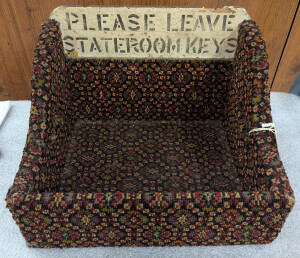 | SHORT DESCRIPTION: Open top, carpeted box used to collect stateroom keys on the steamer Commonwealth. NOTES: See the attached pamphlet by William King Covell, Wilkinson Press, Inc., Newport, Rhode Island, January 1955. The paper “The Steamer Commonwealth,” by Warren T. Berry and J. Howland Gardner, published by the Society of Naval Architects and Marine Engineers, New York, 1908, is the chief source of the notes in this leaflet. Information has been contributed by Elwin M. Eldredge and by other friends. This is the fourteenth of a series of leaflets devoted to steamboats of Long Island Sound. Four hundred copies were printed by the Wilkinson Press, Inc., of Newport, in the month of January 1955. See the attached article published in The New York Architect, published by The Harwell-Evans Company, New York, Vol. 2, July 1908, No. 7. It includes an editorial of the steamer Commonwealth and a discussion of the interior treatment, decoration and furnishing of the Commonwealth. It includes interior and exterior images of the boat and plans. NOTES: The Fall River Line was a famous and long-running passenger transportation service (1847–1937) that connected New York City and Boston via a combination of overnight steamboat travel along Long Island Sound (and Narragansett Bay) and rail connections. Passengers typically took a night boat from New York to Fall River, Massachusetts, then continued by train to Boston (or vice versa), making it a luxurious and popular "rail-water" route, especially during the Gilded Age. The company was founded by Richard Borden who began a regular steamboat service between New York City and Fall River in 1847 (the Bay State Steamboat Company/Bay State Line). In 1863 the Bay State Steamboat Company was sold to the Boston, Newport and New York Steamboat Company, and the railroad was extended between Fall River and Newport, Rhode Island. In 1869 the line was sold to the Narragansett Steamboat Company (Narragansett Steamship Company). In 1872 the Fall River Line was completely reorganized and became part of the Old Colony Railroad, under the name Old Colony Steamboat Company. In 1893, the Fall River Line became part of the New York, New Haven and Hartford Railroad (commonly called the New Haven Railroad). Under this railroad's influence, the steamboat operations (including the prominent Fall River Line) were reorganized and operated through the New England Navigation Company (organized January 1, 1905, the Fall River Line became a division in 1906). By the early 1910s (evidenced by references like 1913 stock certificates and reports), operations and marketing increasingly used New England Steamship Company (often abbreviated N.E.S.S. Co.). The shift to the new name likely occurred gradually between 1905 and 1910, with the name "New England Steamship Company" becoming the primary public and operational identity by the late 1900s/early 1910s. No single "renaming date" is pinpointed in primary sources, but the effective transition to the Steamship Company name for day-to-day branding and management was complete by around 1910–1912. The New England Steamship Company directly managed and marketed the Fall River Line's fleet of elegant side-wheel steamships (such as the Pilgrim, Priscilla, Puritan, Commonwealth, and Providence). After its employees went on strike in the middle of 1937, the company chose, in the face of ongoing losses due to land transportation, to liquidate rather than negotiate with the union. Vessels operated by the line: Bay State (1847), Massachusetts (1847), Empire state (1848), State of Maine (acquired 1849), Metropolis (1854), Old Colony (1865), Newport (1865), Bristol (1867, acquired 1869), Providence (1867, acquired 1869) Pilgrim (1883), City of Fall River (1883, freighter), City of Brockton (1886, freighter), Puritan (1889), Plymouth (1890; rebuilt 1906-1907), City of Taunton (1892, freighter), Priscilla (1894), Providence (1905), and Commonwealth (1908). VESSEL INFORMATION - VESSEL NAME: COMMONWEALTH VESSEL BUILT: 1908 SERVICE DATES: July 1, 1908-1937 VESSEL TYPE: SIDE-WHEEL STEAMBOAT SHIPBUILDERS: WILLIAM CRAMP & SONS BUILDERLOCATION: PENNSYLVANIA, PHILADELPHIA SHIP LINE: FALL RIVER LINE SHIP OWNER: NEW ENGLAND STEAM SHIP COMPANY VESSEL DIMENSIONS: 5,980 tons, 437'9" x 55' x 19'3" FATE: Scrapped in Baltimore, Maryland in 1938. VESSEL HISTORY: The Fall River Line became a division of the New England Navigation Company in 1906. [Description pulled from the Fall River Globe, June 23, 1908, page 8] The $2,000,000, four-decked, 456-foot long side-wheel steamboat Commonwealth was last vessel added to the line (1908). It was the largest of the sound steamer ever built (known as the ‘Giantess of the Sound’). Commonwealth’s interior decoration was created by Pottier and Stymus Company of New York and featured several different architectural styles, for example, a Louis XVI style dining room and the adjoining café in Italian Renaissance. The vessel could accommodate 2000. Some of the rooms “are of regal luxury, arranged in suites with baths.” The double-skilled hull was steel and divided into water-tight compartments. After of the lobby was a library, or social hall, fitted with mahogany bookcases decorated with gilded composition. The barber shop is in old ivory, gilded; the men’s café and the purser’s room off the quarter deck, are in oak ornamentation in color. The grand saloon in Venetian, Gothic vaulted, with artistic ornamentation and color decorations in each section of the vaulting. Aft of the grand salon and separated from by portieres is a Louis XV saloon in old ivory, and on the gallery deck above an Adams saloon in prima vera. Forward of the saloon deck is an Empire saloon in mahogany with gilded ornaments, and on the gallery deck a Louis XVI saloon in solid color with gilded ornamentations. The Commonwealth’s engines are of triple expansion inclined pattern, with no walking beam, with about 3000 horse-power. The paddle wheels are constructed with feathering buckets. On the night of September 26, 1908 the cargo ship Volund collided in dense fog with the Commonwealth off Race Rock off eastern Long Island, between Fisher’s Island and Plum island. The Commonwealth rescued all 16 people from Volund. In a heavy fog in 1912, the Commonwealth rammed and badly dented the new armored dreadnaught New Hampshire. After the employees of the Fall River Line went on strike in the middle of 1937, the company chose, in the face of ongoing losses due to land transportation, to liquidate the company rather than negotiate with the union. The remaining vessels (Plymouth, Priscilla, Providence and Commonwealth) were sold for $88,000 and were towed to Baltimore and scrapped. | CL1267 | |||||||
| 14 | No image URL. | SHORT DESCRIPTION: Tempera on board, original advertising poster. NOTES: See the attached pamphlet by William King Covell, Wilkinson Press, Inc., Newport, Rhode Island, January 1955. The paper “The Steamer Commonwealth,” by Warren T. Berry and J. Howland Gardner, published by the Society of Naval Architects and Marine Engineers, New York, 1908, is the chief source of the notes in this leaflet. Information has been contributed by Elwin M. Eldredge and by other friends. This is the fourteenth of a series of leaflets devoted to steamboats of Long Island Sound. Four hundred copies were printed by the Wilkinson Press, Inc., of Newport, in the month of January 1955. See the attached article published in The New York Architect, published by The Harwell-Evans Company, New York, Vol. 2, July 1908, No. 7. It includes an editorial of the steamer Commonwealth and a discussion of the interior treatment, decoration and furnishing of the Commonwealth. It includes interior and exterior images of the boat and plans. NOTES: The Fall River Line was a famous and long-running passenger transportation service (1847–1937) that connected New York City and Boston via a combination of overnight steamboat travel along Long Island Sound (and Narragansett Bay) and rail connections. Passengers typically took a night boat from New York to Fall River, Massachusetts, then continued by train to Boston (or vice versa), making it a luxurious and popular "rail-water" route, especially during the Gilded Age. The company was founded by Richard Borden who began a regular steamboat service between New York City and Fall River in 1847 (the Bay State Steamboat Company/Bay State Line). In 1863 the Bay State Steamboat Company was sold to the Boston, Newport and New York Steamboat Company, and the railroad was extended between Fall River and Newport, Rhode Island. In 1869 the line was sold to the Narragansett Steamboat Company (Narragansett Steamship Company). In 1872 the Fall River Line was completely reorganized and became part of the Old Colony Railroad, under the name Old Colony Steamboat Company. In 1893, the Fall River Line became part of the New York, New Haven and Hartford Railroad (commonly called the New Haven Railroad). Under this railroad's influence, the steamboat operations (including the prominent Fall River Line) were reorganized and operated through the New England Navigation Company (organized January 1, 1905, the Fall River Line became a division in 1906). By the early 1910s (evidenced by references like 1913 stock certificates and reports), operations and marketing increasingly used New England Steamship Company (often abbreviated N.E.S.S. Co.). The shift to the new name likely occurred gradually between 1905 and 1910, with the name "New England Steamship Company" becoming the primary public and operational identity by the late 1900s/early 1910s. No single "renaming date" is pinpointed in primary sources, but the effective transition to the Steamship Company name for day-to-day branding and management was complete by around 1910–1912. The New England Steamship Company directly managed and marketed the Fall River Line's fleet of elegant side-wheel steamships (such as the Pilgrim, Priscilla, Puritan, Commonwealth, and Providence). After its employees went on strike in the middle of 1937, the company chose, in the face of ongoing losses due to land transportation, to liquidate rather than negotiate with the union. Vessels operated by the line: Bay State (1847), Massachusetts (1847), Empire state (1848), State of Maine (acquired 1849), Metropolis (1854), Old Colony (1865), Newport (1865), Bristol (1867, acquired 1869), Providence (1867, acquired 1869), Pilgrim (1883), City of Fall River (1883, freighter), City of Brockton (1886, freighter), Puritan (1889), Plymouth (1890; rebuilt 1906-1907), City of Taunton (1892, freighter), Priscilla (1894), Providence (1905), and Commonwealth (1908). VESSEL INFORMATION - VESSEL NAME: COMMONWEALTH VESSEL BUILT: 1908 SERVICE DATES: July 1, 1908-1937 VESSEL TYPE: SIDE-WHEEL STEAMBOAT SHIPBUILDERS: WILLIAM CRAMP & SONS BUILDERLOCATION: PENNSYLVANIA, PHILADELPHIA SHIP LINE: FALL RIVER LINE SHIP OWNER: NEW ENGLAND STEAM SHIP COMPANY VESSEL DIMENSIONS: 5,980 tons, 437'9" x 55' x 19'3" FATE: Scrapped in Baltimore, Maryland in 1938. VESSEL HISTORY: The Fall River Line became a division of the New England Navigation Company in 1906. [Description pulled from the Fall River Globe, June 23, 1908, page 8] The $2,000,000, four-decked, 456-foot long side-wheel steamboat Commonwealth was last vessel added to the line (1908). It was the largest of the sound steamer ever built (known as the ‘Giantess of the Sound’). Commonwealth’s interior decoration was created by Pottier and Stymus Company of New York and featured several different architectural styles, for example, a Louis XVI style dining room and the adjoining café in Italian Renaissance. The vessel could accommodate 2000. Some of the rooms “are of regal luxury, arranged in suites with baths.” The double-skilled hull was steel and divided into water-tight compartments. After of the lobby was a library, or social hall, fitted with mahogany bookcases decorated with gilded composition. The barber shop is in old ivory, gilded; the men’s café and the purser’s room off the quarter deck, are in oak ornamentation in color. The grand saloon in Venetian, Gothic vaulted, with artistic ornamentation and color decorations in each section of the vaulting. Aft of the grand salon and separated from by portieres is a Louis XV saloon in old ivory, and on the gallery deck above an Adams saloon in prima vera. Forward of the saloon deck is an Empire saloon in mahogany with gilded ornaments, and on the gallery deck a Louis XVI saloon in solid color with gilded ornamentations. The Commonwealth’s engines are of triple expansion inclined pattern, with no walking beam, with about 3000 horse-power. The paddle wheels are constructed with feathering buckets. On the night of September 26, 1908 the cargo ship Volund collided in dense fog with the Commonwealth off Race Rock off eastern Long Island, between Fisher’s Island and Plum Island. The Commonwealth rescued all 16 people from Volund. In a heavy fog in 1912, the Commonwealth rammed and badly dented the new armored dreadnaught New Hampshire. After the employees of the Fall River Line went on strike in the middle of 1937, the company chose, in the face of ongoing losses due to land transportation, to liquidate the company rather than negotiate with the union. The remaining vessels (Plymouth, Priscilla, Providence and Commonwealth) were sold for $88,000 and were towed to Baltimore and scrapped. | CL6750 | |||||||
| 15 | 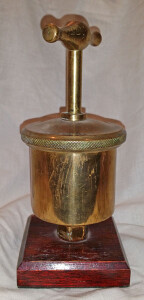 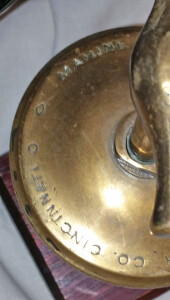 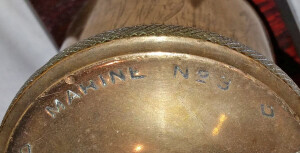 | NOTES: From starboard L.P. air pump. NOTES: See the attached pamphlet by William King Covell, Wilkinson Press, Inc., Newport, Rhode Island, January 1955. The paper “The Steamer Commonwealth,” by Warren T. Berry and J. Howland Gardner, published by the Society of Naval Architects and Marine Engineers, New York, 1908, is the chief source of the notes in this leaflet. Information has been contributed by Elwin M. Eldredge and by other friends. This is the fourteenth of a series of leaflets devoted to steamboats of Long Island Sound. Four hundred copies were printed by the Wilkinson Press, Inc., of Newport, in the month of January 1955. See the attached article published in The New York Architect, published by The Harwell-Evans Company, New York, Vol. 2, July 1908, No. 7. It includes an editorial of the steamer Commonwealth and a discussion of the interior treatment, decoration and furnishing of the Commonwealth. It includes interior and exterior images of the boat and plans. NOTES: The Fall River Line was a famous and long-running passenger transportation service (1847–1937) that connected New York City and Boston via a combination of overnight steamboat travel along Long Island Sound (and Narragansett Bay) and rail connections. Passengers typically took a night boat from New York to Fall River, Massachusetts, then continued by train to Boston (or vice versa), making it a luxurious and popular "rail-water" route, especially during the Gilded Age. The company was founded by Richard Borden who began a regular steamboat service between New York City and Fall River in 1847 (the Bay State Steamboat Company/Bay State Line). In 1863 the Bay State Steamboat Company was sold to the Boston, Newport and New York Steamboat Company, and the railroad was extended between Fall River and Newport, Rhode Island. In 1869 the line was sold to the Narragansett Steamboat Company (Narragansett Steamship Company). In 1872 the Fall River Line was completely reorganized and became part of the Old Colony Railroad, under the name Old Colony Steamboat Company. In 1893, the Fall River Line became part of the New York, New Haven and Hartford Railroad (commonly called the New Haven Railroad). Under this railroad's influence, the steamboat operations (including the prominent Fall River Line) were reorganized and operated through the New England Navigation Company (organized January 1, 1905, the Fall River Line became a division in 1906). By the early 1910s (evidenced by references like 1913 stock certificates and reports), operations and marketing increasingly used New England Steamship Company (often abbreviated N.E.S.S. Co.). The shift to the new name likely occurred gradually between 1905 and 1910, with the name "New England Steamship Company" becoming the primary public and operational identity by the late 1900s/early 1910s. No single "renaming date" is pinpointed in primary sources, but the effective transition to the Steamship Company name for day-to-day branding and management was complete by around 1910–1912. The New England Steamship Company directly managed and marketed the Fall River Line's fleet of elegant side-wheel steamships (such as the Pilgrim, Priscilla, Puritan, Commonwealth, and Providence). After its employees went on strike in the middle of 1937, the company chose, in the face of ongoing losses due to land transportation, to liquidate rather than negotiate with the union. Vessels operated by the line: Bay State (1847), Massachusetts (1847), Empire state (1848), State of Maine (acquired 1849), Metropolis (1854), Old Colony (1865), Newport (1865), Bristol (1867, acquired 1869), Providence (1867, acquired 1869) Pilgrim (1883), City of Fall River (1883, freighter), City of Brockton (1886, freighter), Puritan (1889), Plymouth (1890; rebuilt 1906-1907), City of Taunton (1892, freighter), Priscilla (1894), Providence (1905), and Commonwealth (1908). VESSEL INFORMATION - VESSEL NAME: COMMONWEALTH VESSEL BUILT: 1908 SERVICE DATES: July 1, 1908-1937 VESSEL TYPE: SIDE-WHEEL STEAMBOAT SHIPBUILDERS: WILLIAM CRAMP & SONS BUILDERLOCATION: PENNSYLVANIA, PHILADELPHIA SHIP LINE: FALL RIVER LINE SHIP OWNER: NEW ENGLAND STEAM SHIP COMPANY VESSEL DIMENSIONS: 5,980 tons, 437'9" x 55' x 19'3" FATE: Scrapped in Baltimore, Maryland in 1938. VESSEL HISTORY: The Fall River Line became a division of the New England Navigation Company in 1906. [Description pulled from the Fall River Globe, June 23, 1908, page 8] The $2,000,000, four-decked, 456-foot long side-wheel steamboat Commonwealth was last vessel added to the line (1908). It was the largest of the sound steamer ever built (known as the ‘Giantess of the Sound’). Commonwealth’s interior decoration was created by Pottier and Stymus Company of New York and featured several different architectural styles, for example, a Louis XVI style dining room and the adjoining café in Italian Renaissance. The vessel could accommodate 2000. Some of the rooms “are of regal luxury, arranged in suites with baths.” The double-skilled hull was steel and divided into water-tight compartments. After of the lobby was a library, or social hall, fitted with mahogany bookcases decorated with gilded composition. The barber shop is in old ivory, gilded; the men’s café and the purser’s room off the quarter deck, are in oak ornamentation in color. The grand saloon in Venetian, Gothic vaulted, with artistic ornamentation and color decorations in each section of the vaulting. Aft of the grand salon and separated from by portieres is a Louis XV saloon in old ivory, and on the gallery deck above an Adams saloon in prima vera. Forward of the saloon deck is an Empire saloon in mahogany with gilded ornaments, and on the gallery deck a Louis XVI saloon in solid color with gilded ornamentations. The Commonwealth’s engines are of triple expansion inclined pattern, with no walking beam, with about 3000 horse-power. The paddle wheels are constructed with feathering buckets. On the night of September 26, 1908 the cargo ship Volund collided in dense fog with the Commonwealth off Race Rock off eastern Long Island, between Fisher’s Island and Plum Island. The Commonwealth rescued all 16 people from Volund. In a heavy fog in 1912, the Commonwealth rammed and badly dented the new armored dreadnaught New Hampshire. After the employees of the Fall River Line went on strike in the middle of 1937, the company chose, in the face of ongoing losses due to land transportation, to liquidate the company rather than negotiate with the union. The remaining vessels (Plymouth, Priscilla, Providence and Commonwealth) were sold for $88,000 and were towed to Baltimore and scrapped. | CL2774 | |||||||
| 16 | No image URL. | NOTES: See the attached pamphlet by William King Covell, Wilkinson Press, Inc., Newport, Rhode Island, January 1955. The paper “The Steamer Commonwealth,” by Warren T. Berry and J. Howland Gardner, published by the Society of Naval Architects and Marine Engineers, New York, 1908, is the chief source of the notes in this leaflet. Information has been contributed by Elwin M. Eldredge and by other friends. This is the fourteenth of a series of leaflets devoted to steamboats of Long Island Sound. Four hundred copies were printed by the Wilkinson Press, Inc., of Newport, in the month of January 1955. See the attached article published in The New York Architect, published by The Harwell-Evans Company, New York, Vol. 2, July 1908, No. 7. It includes an editorial of the steamer Commonwealth and a discussion of the interior treatment, decoration and furnishing of the Commonwealth. It includes interior and exterior images of the boat and plans. NOTES: The Fall River Line was a famous and long-running passenger transportation service (1847–1937) that connected New York City and Boston via a combination of overnight steamboat travel along Long Island Sound (and Narragansett Bay) and rail connections. Passengers typically took a night boat from New York to Fall River, Massachusetts, then continued by train to Boston (or vice versa), making it a luxurious and popular "rail-water" route, especially during the Gilded Age. The company was founded by Richard Borden who began a regular steamboat service between New York City and Fall River in 1847 (the Bay State Steamboat Company/Bay State Line). In 1863 the Bay State Steamboat Company was sold to the Boston, Newport and New York Steamboat Company, and the railroad was extended between Fall River and Newport, Rhode Island. In 1869 the line was sold to the Narragansett Steamboat Company (Narragansett Steamship Company). In 1872 the Fall River Line was completely reorganized and became part of the Old Colony Railroad, under the name Old Colony Steamboat Company. In 1893, the Fall River Line became part of the New York, New Haven and Hartford Railroad (commonly called the New Haven Railroad). Under this railroad's influence, the steamboat operations (including the prominent Fall River Line) were reorganized and operated through the New England Navigation Company (organized January 1, 1905, the Fall River Line became a division in 1906). By the early 1910s (evidenced by references like 1913 stock certificates and reports), operations and marketing increasingly used New England Steamship Company (often abbreviated N.E.S.S. Co.). The shift to the new name likely occurred gradually between 1905 and 1910, with the name "New England Steamship Company" becoming the primary public and operational identity by the late 1900s/early 1910s. No single "renaming date" is pinpointed in primary sources, but the effective transition to the Steamship Company name for day-to-day branding and management was complete by around 1910–1912. The New England Steamship Company directly managed and marketed the Fall River Line's fleet of elegant side-wheel steamships (such as the Pilgrim, Priscilla, Puritan, Commonwealth, and Providence). After its employees went on strike in the middle of 1937, the company chose, in the face of ongoing losses due to land transportation, to liquidate rather than negotiate with the union. Vessels operated by the line: Bay State (1847), Massachusetts (1847), Empire state (1848), State of Maine (acquired 1849), Metropolis (1854), Old Colony (1865), Newport (1865), Bristol (1867, acquired 1869), Providence (1867, acquired 1869), Pilgrim (1883), City of Fall River (1883, freighter), City of Brockton (1886, freighter), Puritan (1889), Plymouth (1890; rebuilt 1906-1907), City of Taunton (1892, freighter), Priscilla (1894), Providence (1905), and Commonwealth (1908). VESSEL INFORMATION - VESSEL NAME: COMMONWEALTH VESSEL BUILT: 1908 SERVICE DATES: July 1, 1908-1937 VESSEL TYPE: SIDE-WHEEL STEAMBOAT SHIPBUILDERS: WILLIAM CRAMP & SONS BUILDERLOCATION: PENNSYLVANIA, PHILADELPHIA SHIP LINE: FALL RIVER LINE SHIP OWNER: NEW ENGLAND STEAM SHIP COMPANY VESSEL DIMENSIONS: 5,980 tons, 437'9" x 55' x 19'3" FATE: Scrapped in Baltimore, Maryland in 1938. VESSEL HISTORY: The Fall River Line became a division of the New England Navigation Company in 1906. [Description pulled from the Fall River Globe, June 23, 1908, page 8] The $2,000,000, four-decked, 456-foot long side-wheel steamboat Commonwealth was last vessel added to the line (1908). It was the largest of the sound steamer ever built (known as the ‘Giantess of the Sound’). Commonwealth’s interior decoration was created by Pottier and Stymus Company of New York and featured several different architectural styles, for example, a Louis XVI style dining room and the adjoining café in Italian Renaissance. The vessel could accommodate 2000. Some of the rooms “are of regal luxury, arranged in suites with baths.” The double-skilled hull was steel and divided into water-tight compartments. After of the lobby was a library, or social hall, fitted with mahogany bookcases decorated with gilded composition. The barber shop is in old ivory, gilded; the men’s café and the purser’s room off the quarter deck, are in oak ornamentation in color. The grand saloon in Venetian, Gothic vaulted, with artistic ornamentation and color decorations in each section of the vaulting. Aft of the grand salon and separated from by portieres is a Louis XV saloon in old ivory, and on the gallery deck above an Adams saloon in prima vera. Forward of the saloon deck is an Empire saloon in mahogany with gilded ornaments, and on the gallery deck a Louis XVI saloon in solid color with gilded ornamentations. The Commonwealth’s engines are of triple expansion inclined pattern, with no walking beam, with about 3000 horse-power. The paddle wheels are constructed with feathering buckets. On the night of September 26, 1908 the cargo ship Volund collided in dense fog with the Commonwealth off Race Rock off eastern Long Island, between Fisher’s Island and Plum Island. The Commonwealth rescued all 16 people from Volund. In a heavy fog in 1912, the Commonwealth rammed and badly dented the new armored dreadnaught New Hampshire. After the employees of the Fall River Line went on strike in the middle of 1937, the company chose, in the face of ongoing losses due to land transportation, to liquidate the company rather than negotiate with the union. The remaining vessels (Plymouth, Priscilla, Providence and Commonwealth) were sold for $88,000 and were towed to Baltimore and scrapped. | CL7307 | |||||||
| 17 | No image URL. | NOTES: See the attached pamphlet by William King Covell, Wilkinson Press, Inc., Newport, Rhode Island, January 1955. The paper “The Steamer Commonwealth,” by Warren T. Berry and J. Howland Gardner, published by the Society of Naval Architects and Marine Engineers, New York, 1908, is the chief source of the notes in this leaflet. Information has been contributed by Elwin M. Eldredge and by other friends. This is the fourteenth of a series of leaflets devoted to steamboats of Long Island Sound. Four hundred copies were printed by the Wilkinson Press, Inc., of Newport, in the month of January 1955. See the attached article published in The New York Architect, published by The Harwell-Evans Company, New York, Vol. 2, July 1908, No. 7. It includes an editorial of the steamer Commonwealth and a discussion of the interior treatment, decoration and furnishing of the Commonwealth. It includes interior and exterior images of the boat and plans. NOTES: The Fall River Line was a famous and long-running passenger transportation service (1847–1937) that connected New York City and Boston via a combination of overnight steamboat travel along Long Island Sound (and Narragansett Bay) and rail connections. Passengers typically took a night boat from New York to Fall River, Massachusetts, then continued by train to Boston (or vice versa), making it a luxurious and popular "rail-water" route, especially during the Gilded Age. The company was founded by Richard Borden who began a regular steamboat service between New York City and Fall River in 1847 (the Bay State Steamboat Company/Bay State Line). In 1863 the Bay State Steamboat Company was sold to the Boston, Newport and New York Steamboat Company, and the railroad was extended between Fall River and Newport, Rhode Island. In 1869 the line was sold to the Narragansett Steamboat Company (Narragansett Steamship Company). In 1872 the Fall River Line was completely reorganized and became part of the Old Colony Railroad, under the name Old Colony Steamboat Company. In 1893, the Fall River Line became part of the New York, New Haven and Hartford Railroad (commonly called the New Haven Railroad). Under this railroad's influence, the steamboat operations (including the prominent Fall River Line) were reorganized and operated through the New England Navigation Company (organized January 1, 1905, the Fall River Line became a division in 1906). By the early 1910s (evidenced by references like 1913 stock certificates and reports), operations and marketing increasingly used New England Steamship Company (often abbreviated N.E.S.S. Co.). The shift to the new name likely occurred gradually between 1905 and 1910, with the name "New England Steamship Company" becoming the primary public and operational identity by the late 1900s/early 1910s. No single "renaming date" is pinpointed in primary sources, but the effective transition to the Steamship Company name for day-to-day branding and management was complete by around 1910–1912. The New England Steamship Company directly managed and marketed the Fall River Line's fleet of elegant side-wheel steamships (such as the Pilgrim, Priscilla, Puritan, Commonwealth, and Providence). After its employees went on strike in the middle of 1937, the company chose, in the face of ongoing losses due to land transportation, to liquidate rather than negotiate with the union. Vessels operated by the line: Bay State (1847), Massachusetts (1847), Empire state (1848), State of Maine (acquired 1849), Metropolis (1854), Old Colony (1865), Newport (1865), Bristol (1867, acquired 1869), Providence (1867, acquired 1869), Pilgrim (1883), City of Fall River (1883, freighter), City of Brockton (1886, freighter), Puritan (1889), Plymouth (1890; rebuilt 1906-1907), City of Taunton (1892, freighter), Priscilla (1894), Providence (1905), and Commonwealth (1908). VESSEL INFORMATION - VESSEL NAME: COMMONWEALTH VESSEL BUILT: 1908 SERVICE DATES: July 1, 1908-1937 VESSEL TYPE: SIDE-WHEEL STEAMBOAT SHIPBUILDERS: WILLIAM CRAMP & SONS BUILDERLOCATION: PENNSYLVANIA, PHILADELPHIA SHIP LINE: FALL RIVER LINE SHIP OWNER: NEW ENGLAND STEAM SHIP COMPANY VESSEL DIMENSIONS: 5,980 tons, 437'9" x 55' x 19'3" FATE: Scrapped in Baltimore, Maryland in 1938. VESSEL HISTORY: The Fall River Line became a division of the New England Navigation Company in 1906. [Description pulled from the Fall River Globe, June 23, 1908, page 8] The $2,000,000, four-decked, 456-foot long side-wheel steamboat Commonwealth was last vessel added to the line (1908). It was the largest of the sound steamer ever built (known as the ‘Giantess of the Sound’). Commonwealth’s interior decoration was created by Pottier and Stymus Company of New York and featured several different architectural styles, for example, a Louis XVI style dining room and the adjoining café in Italian Renaissance. The vessel could accommodate 2000. Some of the rooms “are of regal luxury, arranged in suites with baths.” The double-skilled hull was steel and divided into water-tight compartments. After of the lobby was a library, or social hall, fitted with mahogany bookcases decorated with gilded composition. The barber shop is in old ivory, gilded; the men’s café and the purser’s room off the quarter deck, are in oak ornamentation in color. The grand saloon in Venetian, Gothic vaulted, with artistic ornamentation and color decorations in each section of the vaulting. Aft of the grand salon and separated from by portieres is a Louis XV saloon in old ivory, and on the gallery deck above an Adams saloon in prima vera. Forward of the saloon deck is an Empire saloon in mahogany with gilded ornaments, and on the gallery deck a Louis XVI saloon in solid color with gilded ornamentations. The Commonwealth’s engines are of triple expansion inclined pattern, with no walking beam, with about 3000 horse-power. The paddle wheels are constructed with feathering buckets. On the night of September 26, 1908 the cargo ship Volund collided in dense fog with the Commonwealth off Race Rock off eastern Long Island, between Fisher’s Island and Plum Island. The Commonwealth rescued all 16 people from Volund. In a heavy fog in 1912, the Commonwealth rammed and badly dented the new armored dreadnaught New Hampshire. After the employees of the Fall River Line went on strike in the middle of 1937, the company chose, in the face of ongoing losses due to land transportation, to liquidate the company rather than negotiate with the union. The remaining vessels (Plymouth, Priscilla, Providence and Commonwealth) were sold for $88,000 and were towed to Baltimore and scrapped. | CL27549 | |||||||
| 18 | No image URL. | NOTES: See the attached pamphlet by William King Covell, Wilkinson Press, Inc., Newport, Rhode Island, January 1955. The paper “The Steamer Commonwealth,” by Warren T. Berry and J. Howland Gardner, published by the Society of Naval Architects and Marine Engineers, New York, 1908, is the chief source of the notes in this leaflet. Information has been contributed by Elwin M. Eldredge and by other friends. This is the fourteenth of a series of leaflets devoted to steamboats of Long Island Sound. Four hundred copies were printed by the Wilkinson Press, Inc., of Newport, in the month of January 1955. See the attached article published in The New York Architect, published by The Harwell-Evans Company, New York, Vol. 2, July 1908, No. 7. It includes an editorial of the steamer Commonwealth and a discussion of the interior treatment, decoration and furnishing of the Commonwealth. It includes interior and exterior images of the boat and plans. NOTES: The Fall River Line was a famous and long-running passenger transportation service (1847–1937) that connected New York City and Boston via a combination of overnight steamboat travel along Long Island Sound (and Narragansett Bay) and rail connections. Passengers typically took a night boat from New York to Fall River, Massachusetts, then continued by train to Boston (or vice versa), making it a luxurious and popular "rail-water" route, especially during the Gilded Age. The company was founded by Richard Borden who began a regular steamboat service between New York City and Fall River in 1847 (the Bay State Steamboat Company/Bay State Line). In 1863 the Bay State Steamboat Company was sold to the Boston, Newport and New York Steamboat Company, and the railroad was extended between Fall River and Newport, Rhode Island. In 1869 the line was sold to the Narragansett Steamboat Company (Narragansett Steamship Company). In 1872 the Fall River Line was completely reorganized and became part of the Old Colony Railroad, under the name Old Colony Steamboat Company. In 1893, the Fall River Line became part of the New York, New Haven and Hartford Railroad (commonly called the New Haven Railroad). Under this railroad's influence, the steamboat operations (including the prominent Fall River Line) were reorganized and operated through the New England Navigation Company (organized January 1, 1905, the Fall River Line became a division in 1906). By the early 1910s (evidenced by references like 1913 stock certificates and reports), operations and marketing increasingly used New England Steamship Company (often abbreviated N.E.S.S. Co.). The shift to the new name likely occurred gradually between 1905 and 1910, with the name "New England Steamship Company" becoming the primary public and operational identity by the late 1900s/early 1910s. No single "renaming date" is pinpointed in primary sources, but the effective transition to the Steamship Company name for day-to-day branding and management was complete by around 1910–1912. The New England Steamship Company directly managed and marketed the Fall River Line's fleet of elegant side-wheel steamships (such as the Pilgrim, Priscilla, Puritan, Commonwealth, and Providence). After its employees went on strike in the middle of 1937, the company chose, in the face of ongoing losses due to land transportation, to liquidate rather than negotiate with the union. Vessels operated by the line: Bay State (1847), Massachusetts (1847), Empire state (1848), State of Maine (acquired 1849), Metropolis (1854), Old Colony (1865), Newport (1865), Bristol (1867, acquired 1869), Providence (1867, acquired 1869) Pilgrim (1883), City of Fall River (1883, freighter), City of Brockton (1886, freighter), Puritan (1889), Plymouth (1890; rebuilt 1906-1907), City of Taunton (1892, freighter), Priscilla (1894), Providence (1905), and Commonwealth (1908). VESSEL INFORMATION - VESSEL NAME: COMMONWEALTH VESSEL BUILT: 1908 SERVICE DATES: July 1, 1908-1937 VESSEL TYPE: SIDE-WHEEL STEAMBOAT SHIPBUILDERS: WILLIAM CRAMP & SONS BUILDERLOCATION: PENNSYLVANIA, PHILADELPHIA SHIP LINE: FALL RIVER LINE SHIP OWNER: NEW ENGLAND STEAM SHIP COMPANY VESSEL DIMENSIONS: 5,980 tons, 437'9" x 55' x 19'3" FATE: Scrapped in Baltimore, Maryland in 1938. VESSEL HISTORY: The Fall River Line became a division of the New England Navigation Company in 1906. [Description pulled from the Fall River Globe, June 23, 1908, page 8] The $2,000,000, four-decked, 456-foot long side-wheel steamboat Commonwealth was last vessel added to the line (1908). It was the largest of the sound steamer ever built (known as the ‘Giantess of the Sound’). Commonwealth’s interior decoration was created by Pottier and Stymus Company of New York and featured several different architectural styles, for example, a Louis XVI style dining room and the adjoining café in Italian Renaissance. The vessel could accommodate 2000. Some of the rooms “are of regal luxury, arranged in suites with baths.” The double-skilled hull was steel and divided into water-tight compartments. After of the lobby was a library, or social hall, fitted with mahogany bookcases decorated with gilded composition. The barber shop is in old ivory, gilded; the men’s café and the purser’s room off the quarter deck, are in oak ornamentation in color. The grand saloon in Venetian, Gothic vaulted, with artistic ornamentation and color decorations in each section of the vaulting. Aft of the grand salon and separated from by portieres is a Louis XV saloon in old ivory, and on the gallery deck above an Adams saloon in prima vera. Forward of the saloon deck is an Empire saloon in mahogany with gilded ornaments, and on the gallery deck a Louis XVI saloon in solid color with gilded ornamentations. The Commonwealth’s engines are of triple expansion inclined pattern, with no walking beam, with about 3000 horse-power. The paddle wheels are constructed with feathering buckets. On the night of September 26, 1908 the cargo ship Volund collided in dense fog with the Commonwealth off Race Rock off eastern Long Island, between Fisher’s Island and Plum Island. The Commonwealth rescued all 16 people from Volund. In a heavy fog in 1912, the Commonwealth rammed and badly dented the new armored dreadnaught New Hampshire. After the employees of the Fall River Line went on strike in the middle of 1937, the company chose, in the face of ongoing losses due to land transportation, to liquidate the company rather than negotiate with the union. The remaining vessels (Plymouth, Priscilla, Providence and Commonwealth) were sold for $88,000 and were towed to Baltimore and scrapped. | CL198 | |||||||
| 19 | 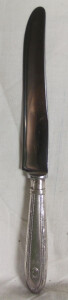 | NOTES: See the attached pamphlet by William King Covell, Wilkinson Press, Inc., Newport, Rhode Island, January 1955. The paper “The Steamer Commonwealth,” by Warren T. Berry and J. Howland Gardner, published by the Society of Naval Architects and Marine Engineers, New York, 1908, is the chief source of the notes in this leaflet. Information has been contributed by Elwin M. Eldredge and by other friends. This is the fourteenth of a series of leaflets devoted to steamboats of Long Island Sound. Four hundred copies were printed by the Wilkinson Press, Inc., of Newport, in the month of January 1955. See the attached article published in The New York Architect, published by The Harwell-Evans Company, New York, Vol. 2, July 1908, No. 7. It includes an editorial of the steamer Commonwealth and a discussion of the interior treatment, decoration and furnishing of the Commonwealth. It includes interior and exterior images of the boat and plans. NOTES: The Fall River Line was a famous and long-running passenger transportation service (1847–1937) that connected New York City and Boston via a combination of overnight steamboat travel along Long Island Sound (and Narragansett Bay) and rail connections. Passengers typically took a night boat from New York to Fall River, Massachusetts, then continued by train to Boston (or vice versa), making it a luxurious and popular "rail-water" route, especially during the Gilded Age. The company was founded by Richard Borden who began a regular steamboat service between New York City and Fall River in 1847 (the Bay State Steamboat Company/Bay State Line). In 1863 the Bay State Steamboat Company was sold to the Boston, Newport and New York Steamboat Company, and the railroad was extended between Fall River and Newport, Rhode Island. In 1869 the line was sold to the Narragansett Steamboat Company (Narragansett Steamship Company). In 1872 the Fall River Line was completely reorganized and became part of the Old Colony Railroad, under the name Old Colony Steamboat Company. In 1893, the Fall River Line became part of the New York, New Haven and Hartford Railroad (commonly called the New Haven Railroad). Under this railroad's influence, the steamboat operations (including the prominent Fall River Line) were reorganized and operated through the New England Navigation Company (organized January 1, 1905, the Fall River Line became a division in 1906). By the early 1910s (evidenced by references like 1913 stock certificates and reports), operations and marketing increasingly used New England Steamship Company (often abbreviated N.E.S.S. Co.). The shift to the new name likely occurred gradually between 1905 and 1910, with the name "New England Steamship Company" becoming the primary public and operational identity by the late 1900s/early 1910s. No single "renaming date" is pinpointed in primary sources, but the effective transition to the Steamship Company name for day-to-day branding and management was complete by around 1910–1912. The New England Steamship Company directly managed and marketed the Fall River Line's fleet of elegant side-wheel steamships (such as the Pilgrim, Priscilla, Puritan, Commonwealth, and Providence). After its employees went on strike in the middle of 1937, the company chose, in the face of ongoing losses due to land transportation, to liquidate rather than negotiate with the union. Vessels operated by the line: Bay State (1847), Massachusetts (1847), Empire state (1848), State of Maine (acquired 1849), Metropolis (1854), Old Colony (1865), Newport (1865), Bristol (1867, acquired 1869), Providence (1867, acquired 1869) Pilgrim (1883), City of Fall River (1883, freighter), City of Brockton (1886, freighter), Puritan (1889), Plymouth (1890; rebuilt 1906-1907), City of Taunton (1892, freighter), Priscilla (1894), Providence (1905), and Commonwealth (1908). VESSEL INFORMATION - VESSEL NAME: COMMONWEALTH VESSEL BUILT: 1908 SERVICE DATES: July 1, 1908-1937 VESSEL TYPE: SIDE-WHEEL STEAMBOAT SHIPBUILDERS: WILLIAM CRAMP & SONS BUILDERLOCATION: PENNSYLVANIA, PHILADELPHIA SHIP LINE: FALL RIVER LINE SHIP OWNER: NEW ENGLAND STEAM SHIP COMPANY VESSEL DIMENSIONS: 5,980 tons, 437'9" x 55' x 19'3" FATE: Scrapped in Baltimore, Maryland in 1938. VESSEL HISTORY: The Fall River Line became a division of the New England Navigation Company in 1906. [Description pulled from the Fall River Globe, June 23, 1908, page 8] The $2,000,000, four-decked, 456-foot long side-wheel steamboat Commonwealth was last vessel added to the line (1908). It was the largest of the sound steamer ever built (known as the ‘Giantess of the Sound’). Commonwealth’s interior decoration was created by Pottier and Stymus Company of New York and featured several different architectural styles, for example, a Louis XVI style dining room and the adjoining café in Italian Renaissance. The vessel could accommodate 2000. Some of the rooms “are of regal luxury, arranged in suites with baths.” The double-skilled hull was steel and divided into water-tight compartments. After of the lobby was a library, or social hall, fitted with mahogany bookcases decorated with gilded composition. The barber shop is in old ivory, gilded; the men’s café and the purser’s room off the quarter deck, are in oak ornamentation in color. The grand saloon in Venetian, Gothic vaulted, with artistic ornamentation and color decorations in each section of the vaulting. Aft of the grand salon and separated from by portieres is a Louis XV saloon in old ivory, and on the gallery deck above an Adams saloon in prima vera. Forward of the saloon deck is an Empire saloon in mahogany with gilded ornaments, and on the gallery deck a Louis XVI saloon in solid color with gilded ornamentations. The Commonwealth’s engines are of triple expansion inclined pattern, with no walking beam, with about 3000 horse-power. The paddle wheels are constructed with feathering buckets. On the night of September 26, 1908 the cargo ship Volund collided in dense fog with the Commonwealth off Race Rock off eastern Long Island, between Fisher’s Island and Plum Island. The Commonwealth rescued all 16 people from Volund. In a heavy fog in 1912, the Commonwealth rammed and badly dented the new armored dreadnaught New Hampshire. After the employees of the Fall River Line went on strike in the middle of 1937, the company chose, in the face of ongoing losses due to land transportation, to liquidate the company rather than negotiate with the union. The remaining vessels (Plymouth, Priscilla, Providence and Commonwealth) were sold for $88,000 and were towed to Baltimore and scrapped. | CL955 | |||||||
| 20 | 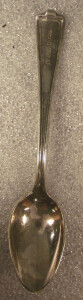 | NOTES: See the attached pamphlet by William King Covell, Wilkinson Press, Inc., Newport, Rhode Island, January 1955. The paper “The Steamer Commonwealth,” by Warren T. Berry and J. Howland Gardner, published by the Society of Naval Architects and Marine Engineers, New York, 1908, is the chief source of the notes in this leaflet. Information has been contributed by Elwin M. Eldredge and by other friends. This is the fourteenth of a series of leaflets devoted to steamboats of Long Island Sound. Four hundred copies were printed by the Wilkinson Press, Inc., of Newport, in the month of January 1955. See the attached article published in The New York Architect, published by The Harwell-Evans Company, New York, Vol. 2, July 1908, No. 7. It includes an editorial of the steamer Commonwealth and a discussion of the interior treatment, decoration and furnishing of the Commonwealth. It includes interior and exterior images of the boat and plans. NOTES: The Fall River Line was a famous and long-running passenger transportation service (1847–1937) that connected New York City and Boston via a combination of overnight steamboat travel along Long Island Sound (and Narragansett Bay) and rail connections. Passengers typically took a night boat from New York to Fall River, Massachusetts, then continued by train to Boston (or vice versa), making it a luxurious and popular "rail-water" route, especially during the Gilded Age. The company was founded by Richard Borden who began a regular steamboat service between New York City and Fall River in 1847 (the Bay State Steamboat Company/Bay State Line). In 1863 the Bay State Steamboat Company was sold to the Boston, Newport and New York Steamboat Company, and the railroad was extended between Fall River and Newport, Rhode Island. In 1869 the line was sold to the Narragansett Steamboat Company (Narragansett Steamship Company). In 1872 the Fall River Line was completely reorganized and became part of the Old Colony Railroad, under the name Old Colony Steamboat Company. In 1893, the Fall River Line became part of the New York, New Haven and Hartford Railroad (commonly called the New Haven Railroad). Under this railroad's influence, the steamboat operations (including the prominent Fall River Line) were reorganized and operated through the New England Navigation Company (organized January 1, 1905, the Fall River Line became a division in 1906). By the early 1910s (evidenced by references like 1913 stock certificates and reports), operations and marketing increasingly used New England Steamship Company (often abbreviated N.E.S.S. Co.). The shift to the new name likely occurred gradually between 1905 and 1910, with the name "New England Steamship Company" becoming the primary public and operational identity by the late 1900s/early 1910s. No single "renaming date" is pinpointed in primary sources, but the effective transition to the Steamship Company name for day-to-day branding and management was complete by around 1910–1912. The New England Steamship Company directly managed and marketed the Fall River Line's fleet of elegant side-wheel steamships (such as the Pilgrim, Priscilla, Puritan, Commonwealth, and Providence). After its employees went on strike in the middle of 1937, the company chose, in the face of ongoing losses due to land transportation, to liquidate rather than negotiate with the union. Vessels operated by the line: Bay State (1847), Massachusetts (1847), Empire state (1848), State of Maine (acquired 1849), Metropolis (1854), Old Colony (1865), Newport (1865), Bristol (1867, acquired 1869), Providence (1867, acquired 1869) Pilgrim (1883), City of Fall River (1883, freighter), City of Brockton (1886, freighter), Puritan (1889), Plymouth (1890; rebuilt 1906-1907), City of Taunton (1892, freighter), Priscilla (1894), Providence (1905), and Commonwealth (1908). VESSEL INFORMATION - VESSEL NAME: COMMONWEALTH VESSEL BUILT: 1908 SERVICE DATES: July 1, 1908-1937 VESSEL TYPE: SIDE-WHEEL STEAMBOAT SHIPBUILDERS: WILLIAM CRAMP & SONS BUILDERLOCATION: PENNSYLVANIA, PHILADELPHIA SHIP LINE: FALL RIVER LINE SHIP OWNER: NEW ENGLAND STEAM SHIP COMPANY VESSEL DIMENSIONS: 5,980 tons, 437'9" x 55' x 19'3" FATE: Scrapped in Baltimore, Maryland in 1938. VESSEL HISTORY: The Fall River Line became a division of the New England Navigation Company in 1906. [Description pulled from the Fall River Globe, June 23, 1908, page 8] The $2,000,000, four-decked, 456-foot long side-wheel steamboat Commonwealth was last vessel added to the line (1908). It was the largest of the sound steamer ever built (known as the ‘Giantess of the Sound’). Commonwealth’s interior decoration was created by Pottier and Stymus Company of New York and featured several different architectural styles, for example, a Louis XVI style dining room and the adjoining café in Italian Renaissance. The vessel could accommodate 2000. Some of the rooms “are of regal luxury, arranged in suites with baths.” The double-skilled hull was steel and divided into water-tight compartments. After of the lobby was a library, or social hall, fitted with mahogany bookcases decorated with gilded composition. The barber shop is in old ivory, gilded; the men’s café and the purser’s room off the quarter deck, are in oak ornamentation in color. The grand saloon in Venetian, Gothic vaulted, with artistic ornamentation and color decorations in each section of the vaulting. Aft of the grand salon and separated from by portieres is a Louis XV saloon in old ivory, and on the gallery deck above an Adams saloon in prima vera. Forward of the saloon deck is an Empire saloon in mahogany with gilded ornaments, and on the gallery deck a Louis XVI saloon in solid color with gilded ornamentations. The Commonwealth’s engines are of triple expansion inclined pattern, with no walking beam, with about 3000 horse-power. The paddle wheels are constructed with feathering buckets. On the night of September 26, 1908 the cargo ship Volund collided in dense fog with the Commonwealth off Race Rock off eastern Long Island, between Fisher’s Island and Plum Island. The Commonwealth rescued all 16 people from Volund. In a heavy fog in 1912, the Commonwealth rammed and badly dented the new armored dreadnaught New Hampshire. After the employees of the Fall River Line went on strike in the middle of 1937, the company chose, in the face of ongoing losses due to land transportation, to liquidate the company rather than negotiate with the union. The remaining vessels (Plymouth, Priscilla, Providence and Commonwealth) were sold for $88,000 and were towed to Baltimore and scrapped. | CL2072 | |||||||
| 21 | No image URL. | NOTES: See the attached pamphlet by William King Covell, Wilkinson Press, Inc., Newport, Rhode Island, January 1955. The paper “The Steamer Commonwealth,” by Warren T. Berry and J. Howland Gardner, published by the Society of Naval Architects and Marine Engineers, New York, 1908, is the chief source of the notes in this leaflet. Information has been contributed by Elwin M. Eldredge and by other friends. This is the fourteenth of a series of leaflets devoted to steamboats of Long Island Sound. Four hundred copies were printed by the Wilkinson Press, Inc., of Newport, in the month of January 1955. See the attached article published in The New York Architect, published by The Harwell-Evans Company, New York, Vol. 2, July 1908, No. 7. It includes an editorial of the steamer Commonwealth and a discussion of the interior treatment, decoration and furnishing of the Commonwealth. It includes interior and exterior images of the boat and plans. NOTES: The Fall River Line was a famous and long-running passenger transportation service (1847–1937) that connected New York City and Boston via a combination of overnight steamboat travel along Long Island Sound (and Narragansett Bay) and rail connections. Passengers typically took a night boat from New York to Fall River, Massachusetts, then continued by train to Boston (or vice versa), making it a luxurious and popular "rail-water" route, especially during the Gilded Age. The company was founded by Richard Borden who began a regular steamboat service between New York City and Fall River in 1847 (the Bay State Steamboat Company/Bay State Line). In 1863 the Bay State Steamboat Company was sold to the Boston, Newport and New York Steamboat Company, and the railroad was extended between Fall River and Newport, Rhode Island. In 1869 the line was sold to the Narragansett Steamboat Company (Narragansett Steamship Company). In 1872 the Fall River Line was completely reorganized and became part of the Old Colony Railroad, under the name Old Colony Steamboat Company. In 1893, the Fall River Line became part of the New York, New Haven and Hartford Railroad (commonly called the New Haven Railroad). Under this railroad's influence, the steamboat operations (including the prominent Fall River Line) were reorganized and operated through the New England Navigation Company (organized January 1, 1905, the Fall River Line became a division in 1906). By the early 1910s (evidenced by references like 1913 stock certificates and reports), operations and marketing increasingly used New England Steamship Company (often abbreviated N.E.S.S. Co.). The shift to the new name likely occurred gradually between 1905 and 1910, with the name "New England Steamship Company" becoming the primary public and operational identity by the late 1900s/early 1910s. No single "renaming date" is pinpointed in primary sources, but the effective transition to the Steamship Company name for day-to-day branding and management was complete by around 1910–1912. The New England Steamship Company directly managed and marketed the Fall River Line's fleet of elegant side-wheel steamships (such as the Pilgrim, Priscilla, Puritan, Commonwealth, and Providence). After its employees went on strike in the middle of 1937, the company chose, in the face of ongoing losses due to land transportation, to liquidate rather than negotiate with the union. Vessels operated by the line: Bay State (1847), Massachusetts (1847), Empire state (1848), State of Maine (acquired 1849), Metropolis (1854), Old Colony (1865), Newport (1865), Bristol (1867, acquired 1869), Providence (1867, acquired 1869), Pilgrim (1883), City of Fall River (1883, freighter), City of Brockton (1886, freighter), Puritan (1889), Plymouth (1890; rebuilt 1906-1907), City of Taunton (1892, freighter), Priscilla (1894), Providence (1905), and Commonwealth (1908). VESSEL INFORMATION - VESSEL NAME: COMMONWEALTH VESSEL BUILT: 1908 SERVICE DATES: July 1, 1908-1937 VESSEL TYPE: SIDE-WHEEL STEAMBOAT SHIPBUILDERS: WILLIAM CRAMP & SONS BUILDERLOCATION: PENNSYLVANIA, PHILADELPHIA SHIP LINE: FALL RIVER LINE SHIP OWNER: NEW ENGLAND STEAM SHIP COMPANY VESSEL DIMENSIONS: 5,980 tons, 437'9" x 55' x 19'3" FATE: Scrapped in Baltimore, Maryland in 1938. VESSEL HISTORY: The Fall River Line became a division of the New England Navigation Company in 1906. [Description pulled from the Fall River Globe, June 23, 1908, page 8] The $2,000,000, four-decked, 456-foot long side-wheel steamboat Commonwealth was last vessel added to the line (1908). It was the largest of the sound steamer ever built (known as the ‘Giantess of the Sound’). Commonwealth’s interior decoration was created by Pottier and Stymus Company of New York and featured several different architectural styles, for example, a Louis XVI style dining room and the adjoining café in Italian Renaissance. The vessel could accommodate 2000. Some of the rooms “are of regal luxury, arranged in suites with baths.” The double-skilled hull was steel and divided into water-tight compartments. After of the lobby was a library, or social hall, fitted with mahogany bookcases decorated with gilded composition. The barber shop is in old ivory, gilded; the men’s café and the purser’s room off the quarter deck, are in oak ornamentation in color. The grand saloon in Venetian, Gothic vaulted, with artistic ornamentation and color decorations in each section of the vaulting. Aft of the grand salon and separated from by portieres is a Louis XV saloon in old ivory, and on the gallery deck above an Adams saloon in prima vera. Forward of the saloon deck is an Empire saloon in mahogany with gilded ornaments, and on the gallery deck a Louis XVI saloon in solid color with gilded ornamentations. The Commonwealth’s engines are of triple expansion inclined pattern, with no walking beam, with about 3000 horse-power. The paddle wheels are constructed with feathering buckets. On the night of September 26, 1908 the cargo ship Volund collided in dense fog with the Commonwealth off Race Rock off eastern Long Island, between Fisher’s Island and Plum Island. The Commonwealth rescued all 16 people from Volund. In a heavy fog in 1912, the Commonwealth rammed and badly dented the new armored dreadnaught New Hampshire. After the employees of the Fall River Line went on strike in the middle of 1937, the company chose, in the face of ongoing losses due to land transportation, to liquidate the company rather than negotiate with the union. The remaining vessels (Plymouth, Priscilla, Providence and Commonwealth) were sold for $88,000 and were towed to Baltimore and scrapped. | CL27548 | |||||||
| 22 | No image URL. | NOTES: See the attached pamphlet by William King Covell, Wilkinson Press, Inc., Newport, Rhode Island, January 1955. The paper “The Steamer Commonwealth,” by Warren T. Berry and J. Howland Gardner, published by the Society of Naval Architects and Marine Engineers, New York, 1908, is the chief source of the notes in this leaflet. Information has been contributed by Elwin M. Eldredge and by other friends. This is the fourteenth of a series of leaflets devoted to steamboats of Long Island Sound. Four hundred copies were printed by the Wilkinson Press, Inc., of Newport, in the month of January 1955. See the attached article published in The New York Architect, published by The Harwell-Evans Company, New York, Vol. 2, July 1908, No. 7. It includes an editorial of the steamer Commonwealth and a discussion of the interior treatment, decoration and furnishing of the Commonwealth. It includes interior and exterior images of the boat and plans. NOTES: The Fall River Line was a famous and long-running passenger transportation service (1847–1937) that connected New York City and Boston via a combination of overnight steamboat travel along Long Island Sound (and Narragansett Bay) and rail connections. Passengers typically took a night boat from New York to Fall River, Massachusetts, then continued by train to Boston (or vice versa), making it a luxurious and popular "rail-water" route, especially during the Gilded Age. The company was founded by Richard Borden who began a regular steamboat service between New York City and Fall River in 1847 (the Bay State Steamboat Company/Bay State Line). In 1863 the Bay State Steamboat Company was sold to the Boston, Newport and New York Steamboat Company, and the railroad was extended between Fall River and Newport, Rhode Island. In 1869 the line was sold to the Narragansett Steamboat Company (Narragansett Steamship Company). In 1872 the Fall River Line was completely reorganized and became part of the Old Colony Railroad, under the name Old Colony Steamboat Company. In 1893, the Fall River Line became part of the New York, New Haven and Hartford Railroad (commonly called the New Haven Railroad). Under this railroad's influence, the steamboat operations (including the prominent Fall River Line) were reorganized and operated through the New England Navigation Company (organized January 1, 1905, the Fall River Line became a division in 1906). By the early 1910s (evidenced by references like 1913 stock certificates and reports), operations and marketing increasingly used New England Steamship Company (often abbreviated N.E.S.S. Co.). The shift to the new name likely occurred gradually between 1905 and 1910, with the name "New England Steamship Company" becoming the primary public and operational identity by the late 1900s/early 1910s. No single "renaming date" is pinpointed in primary sources, but the effective transition to the Steamship Company name for day-to-day branding and management was complete by around 1910–1912. The New England Steamship Company directly managed and marketed the Fall River Line's fleet of elegant side-wheel steamships (such as the Pilgrim, Priscilla, Puritan, Commonwealth, and Providence). After its employees went on strike in the middle of 1937, the company chose, in the face of ongoing losses due to land transportation, to liquidate rather than negotiate with the union. Vessels operated by the line: Bay State (1847), Massachusetts (1847), Empire state (1848), State of Maine (acquired 1849), Metropolis (1854), Old Colony (1865), Newport (1865), Bristol (1867, acquired 1869), Providence (1867, acquired 1869), Pilgrim (1883), City of Fall River (1883, freighter), City of Brockton (1886, freighter), Puritan (1889), Plymouth (1890; rebuilt 1906-1907), City of Taunton (1892, freighter), Priscilla (1894), Providence (1905), and Commonwealth (1908). VESSEL INFORMATION - VESSEL NAME: COMMONWEALTH VESSEL BUILT: 1908 SERVICE DATES: July 1, 1908-1937 VESSEL TYPE: SIDE-WHEEL STEAMBOAT SHIPBUILDERS: WILLIAM CRAMP & SONS BUILDERLOCATION: PENNSYLVANIA, PHILADELPHIA SHIP LINE: FALL RIVER LINE SHIP OWNER: NEW ENGLAND STEAM SHIP COMPANY VESSEL DIMENSIONS: 5,980 tons, 437'9" x 55' x 19'3" FATE: Scrapped in Baltimore, Maryland in 1938. VESSEL HISTORY: The Fall River Line became a division of the New England Navigation Company in 1906. [Description pulled from the Fall River Globe, June 23, 1908, page 8] The $2,000,000, four-decked, 456-foot long side-wheel steamboat Commonwealth was last vessel added to the line (1908). It was the largest of the sound steamer ever built (known as the ‘Giantess of the Sound’). Commonwealth’s interior decoration was created by Pottier and Stymus Company of New York and featured several different architectural styles, for example, a Louis XVI style dining room and the adjoining café in Italian Renaissance. The vessel could accommodate 2000. Some of the rooms “are of regal luxury, arranged in suites with baths.” The double-skilled hull was steel and divided into water-tight compartments. After of the lobby was a library, or social hall, fitted with mahogany bookcases decorated with gilded composition. The barber shop is in old ivory, gilded; the men’s café and the purser’s room off the quarter deck, are in oak ornamentation in color. The grand saloon in Venetian, Gothic vaulted, with artistic ornamentation and color decorations in each section of the vaulting. Aft of the grand salon and separated from by portieres is a Louis XV saloon in old ivory, and on the gallery deck above an Adams saloon in prima vera. Forward of the saloon deck is an Empire saloon in mahogany with gilded ornaments, and on the gallery deck a Louis XVI saloon in solid color with gilded ornamentations. The Commonwealth’s engines are of triple expansion inclined pattern, with no walking beam, with about 3000 horse-power. The paddle wheels are constructed with feathering buckets. On the night of September 26, 1908 the cargo ship Volund collided in dense fog with the Commonwealth off Race Rock off eastern Long Island, between Fisher’s Island and Plum Island. The Commonwealth rescued all 16 people from Volund. In a heavy fog in 1912, the Commonwealth rammed and badly dented the new armored dreadnaught New Hampshire. After the employees of the Fall River Line went on strike in the middle of 1937, the company chose, in the face of ongoing losses due to land transportation, to liquidate the company rather than negotiate with the union. The remaining vessels (Plymouth, Priscilla, Providence and Commonwealth) were sold for $88,000 and were towed to Baltimore and scrapped. | CL190 | |||||||
| 23 | 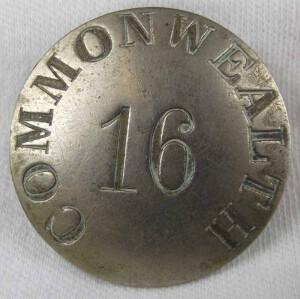 | NOTES: See the attached pamphlet by William King Covell, Wilkinson Press, Inc., Newport, Rhode Island, January 1955. The paper “The Steamer Commonwealth,” by Warren T. Berry and J. Howland Gardner, published by the Society of Naval Architects and Marine Engineers, New York, 1908, is the chief source of the notes in this leaflet. Information has been contributed by Elwin M. Eldredge and by other friends. This is the fourteenth of a series of leaflets devoted to steamboats of Long Island Sound. Four hundred copies were printed by the Wilkinson Press, Inc., of Newport, in the month of January 1955. See the attached article published in The New York Architect, published by The Harwell-Evans Company, New York, Vol. 2, July 1908, No. 7. It includes an editorial of the steamer Commonwealth and a discussion of the interior treatment, decoration and furnishing of the Commonwealth. It includes interior and exterior images of the boat and plans. NOTES: The Fall River Line was a famous and long-running passenger transportation service (1847–1937) that connected New York City and Boston via a combination of overnight steamboat travel along Long Island Sound (and Narragansett Bay) and rail connections. Passengers typically took a night boat from New York to Fall River, Massachusetts, then continued by train to Boston (or vice versa), making it a luxurious and popular "rail-water" route, especially during the Gilded Age. The company was founded by Richard Borden who began a regular steamboat service between New York City and Fall River in 1847 (the Bay State Steamboat Company/Bay State Line). In 1863 the Bay State Steamboat Company was sold to the Boston, Newport and New York Steamboat Company, and the railroad was extended between Fall River and Newport, Rhode Island. In 1869 the line was sold to the Narragansett Steamboat Company (Narragansett Steamship Company). In 1872 the Fall River Line was completely reorganized and became part of the Old Colony Railroad, under the name Old Colony Steamboat Company. In 1893, the Fall River Line became part of the New York, New Haven and Hartford Railroad (commonly called the New Haven Railroad). Under this railroad's influence, the steamboat operations (including the prominent Fall River Line) were reorganized and operated through the New England Navigation Company (organized January 1, 1905, the Fall River Line became a division in 1906). By the early 1910s (evidenced by references like 1913 stock certificates and reports), operations and marketing increasingly used New England Steamship Company (often abbreviated N.E.S.S. Co.). The shift to the new name likely occurred gradually between 1905 and 1910, with the name "New England Steamship Company" becoming the primary public and operational identity by the late 1900s/early 1910s. No single "renaming date" is pinpointed in primary sources, but the effective transition to the Steamship Company name for day-to-day branding and management was complete by around 1910–1912. The New England Steamship Company directly managed and marketed the Fall River Line's fleet of elegant side-wheel steamships (such as the Pilgrim, Priscilla, Puritan, Commonwealth, and Providence). After its employees went on strike in the middle of 1937, the company chose, in the face of ongoing losses due to land transportation, to liquidate rather than negotiate with the union. Vessels operated by the line: Bay State (1847), Massachusetts (1847), Empire state (1848), State of Maine (acquired 1849), Metropolis (1854), Old Colony (1865), Newport (1865), Bristol (1867, acquired 1869), Providence (1867, acquired 1869), Pilgrim (1883), City of Fall River (1883, freighter), City of Brockton (1886, freighter), Puritan (1889), Plymouth (1890; rebuilt 1906-1907), City of Taunton (1892, freighter), Priscilla (1894), Providence (1905), and Commonwealth (1908). VESSEL INFORMATION - VESSEL NAME: COMMONWEALTH VESSEL BUILT: 1908 SERVICE DATES: July 1, 1908-1937 VESSEL TYPE: SIDE-WHEEL STEAMBOAT SHIPBUILDERS: WILLIAM CRAMP & SONS BUILDERLOCATION: PENNSYLVANIA, PHILADELPHIA SHIP LINE: FALL RIVER LINE SHIP OWNER: NEW ENGLAND STEAM SHIP COMPANY VESSEL DIMENSIONS: 5,980 tons, 437'9" x 55' x 19'3" FATE: Scrapped in Baltimore, Maryland in 1938. VESSEL HISTORY: The Fall River Line became a division of the New England Navigation Company in 1906. [Description pulled from the Fall River Globe, June 23, 1908, page 8] The $2,000,000, four-decked, 456-foot long side-wheel steamboat Commonwealth was last vessel added to the line (1908). It was the largest of the sound steamer ever built (known as the ‘Giantess of the Sound’). Commonwealth’s interior decoration was created by Pottier and Stymus Company of New York and featured several different architectural styles, for example, a Louis XVI style dining room and the adjoining café in Italian Renaissance. The vessel could accommodate 2000. Some of the rooms “are of regal luxury, arranged in suites with baths.” The double-skilled hull was steel and divided into water-tight compartments. After of the lobby was a library, or social hall, fitted with mahogany bookcases decorated with gilded composition. The barber shop is in old ivory, gilded; the men’s café and the purser’s room off the quarter deck, are in oak ornamentation in color. The grand saloon in Venetian, Gothic vaulted, with artistic ornamentation and color decorations in each section of the vaulting. Aft of the grand salon and separated from by portieres is a Louis XV saloon in old ivory, and on the gallery deck above an Adams saloon in prima vera. Forward of the saloon deck is an Empire saloon in mahogany with gilded ornaments, and on the gallery deck a Louis XVI saloon in solid color with gilded ornamentations. The Commonwealth’s engines are of triple expansion inclined pattern, with no walking beam, with about 3000 horse-power. The paddle wheels are constructed with feathering buckets. On the night of September 26, 1908 the cargo ship Volund collided in dense fog with the Commonwealth off Race Rock off eastern Long Island, between Fisher’s Island and Plum Island. The Commonwealth rescued all 16 people from Volund. In a heavy fog in 1912, the Commonwealth rammed and badly dented the new armored dreadnaught New Hampshire. After the employees of the Fall River Line went on strike in the middle of 1937, the company chose, in the face of ongoing losses due to land transportation, to liquidate the company rather than negotiate with the union. The remaining vessels (Plymouth, Priscilla, Providence and Commonwealth) were sold for $88,000 and were towed to Baltimore and scrapped. | CL899 | |||||||
| 24 | No image URL. | NOTES: See the attached pamphlet by William King Covell, Wilkinson Press, Inc., Newport, Rhode Island, January 1955. The paper “The Steamer Commonwealth,” by Warren T. Berry and J. Howland Gardner, published by the Society of Naval Architects and Marine Engineers, New York, 1908, is the chief source of the notes in this leaflet. Information has been contributed by Elwin M. Eldredge and by other friends. This is the fourteenth of a series of leaflets devoted to steamboats of Long Island Sound. Four hundred copies were printed by the Wilkinson Press, Inc., of Newport, in the month of January 1955. See the attached article published in The New York Architect, published by The Harwell-Evans Company, New York, Vol. 2, July 1908, No. 7. It includes an editorial of the steamer Commonwealth and a discussion of the interior treatment, decoration and furnishing of the Commonwealth. It includes interior and exterior images of the boat and plans. NOTES: The Fall River Line was a famous and long-running passenger transportation service (1847–1937) that connected New York City and Boston via a combination of overnight steamboat travel along Long Island Sound (and Narragansett Bay) and rail connections. Passengers typically took a night boat from New York to Fall River, Massachusetts, then continued by train to Boston (or vice versa), making it a luxurious and popular "rail-water" route, especially during the Gilded Age. The company was founded by Richard Borden who began a regular steamboat service between New York City and Fall River in 1847 (the Bay State Steamboat Company/Bay State Line). In 1863 the Bay State Steamboat Company was sold to the Boston, Newport and New York Steamboat Company, and the railroad was extended between Fall River and Newport, Rhode Island. In 1869 the line was sold to the Narragansett Steamboat Company (Narragansett Steamship Company). In 1872 the Fall River Line was completely reorganized and became part of the Old Colony Railroad, under the name Old Colony Steamboat Company. In 1893, the Fall River Line became part of the New York, New Haven and Hartford Railroad (commonly called the New Haven Railroad). Under this railroad's influence, the steamboat operations (including the prominent Fall River Line) were reorganized and operated through the New England Navigation Company (organized January 1, 1905, the Fall River Line became a division in 1906). By the early 1910s (evidenced by references like 1913 stock certificates and reports), operations and marketing increasingly used New England Steamship Company (often abbreviated N.E.S.S. Co.). The shift to the new name likely occurred gradually between 1905 and 1910, with the name "New England Steamship Company" becoming the primary public and operational identity by the late 1900s/early 1910s. No single "renaming date" is pinpointed in primary sources, but the effective transition to the Steamship Company name for day-to-day branding and management was complete by around 1910–1912. The New England Steamship Company directly managed and marketed the Fall River Line's fleet of elegant side-wheel steamships (such as the Pilgrim, Priscilla, Puritan, Commonwealth, and Providence). After its employees went on strike in the middle of 1937, the company chose, in the face of ongoing losses due to land transportation, to liquidate rather than negotiate with the union. Vessels operated by the line: Bay State (1847), Massachusetts (1847), Empire state (1848), State of Maine (acquired 1849), Metropolis (1854), Old Colony (1865), Newport (1865), Bristol (1867, acquired 1869), Providence (1867, acquired 1869), Pilgrim (1883), City of Fall River (1883, freighter), City of Brockton (1886, freighter), Puritan (1889), Plymouth (1890; rebuilt 1906-1907), City of Taunton (1892, freighter), Priscilla (1894), Providence (1905), and Commonwealth (1908). VESSEL INFORMATION - VESSEL NAME: COMMONWEALTH VESSEL BUILT: 1908 SERVICE DATES: July 1, 1908-1937 VESSEL TYPE: SIDE-WHEEL STEAMBOAT SHIPBUILDERS: WILLIAM CRAMP & SONS BUILDERLOCATION: PENNSYLVANIA, PHILADELPHIA SHIP LINE: FALL RIVER LINE SHIP OWNER: NEW ENGLAND STEAM SHIP COMPANY VESSEL DIMENSIONS: 5,980 tons, 437'9" x 55' x 19'3" FATE: Scrapped in Baltimore, Maryland in 1938. VESSEL HISTORY: The Fall River Line became a division of the New England Navigation Company in 1906. [Description pulled from the Fall River Globe, June 23, 1908, page 8] The $2,000,000, four-decked, 456-foot long side-wheel steamboat Commonwealth was last vessel added to the line (1908). It was the largest of the sound steamer ever built (known as the ‘Giantess of the Sound’). Commonwealth’s interior decoration was created by Pottier and Stymus Company of New York and featured several different architectural styles, for example, a Louis XVI style dining room and the adjoining café in Italian Renaissance. The vessel could accommodate 2000. Some of the rooms “are of regal luxury, arranged in suites with baths.” The double-skilled hull was steel and divided into water-tight compartments. After of the lobby was a library, or social hall, fitted with mahogany bookcases decorated with gilded composition. The barber shop is in old ivory, gilded; the men’s café and the purser’s room off the quarter deck, are in oak ornamentation in color. The grand saloon in Venetian, Gothic vaulted, with artistic ornamentation and color decorations in each section of the vaulting. Aft of the grand salon and separated from by portieres is a Louis XV saloon in old ivory, and on the gallery deck above an Adams saloon in prima vera. Forward of the saloon deck is an Empire saloon in mahogany with gilded ornaments, and on the gallery deck a Louis XVI saloon in solid color with gilded ornamentations. The Commonwealth’s engines are of triple expansion inclined pattern, with no walking beam, with about 3000 horse-power. The paddle wheels are constructed with feathering buckets. On the night of September 26, 1908 the cargo ship Volund collided in dense fog with the Commonwealth off Race Rock off eastern Long Island, between Fisher’s Island and Plum Island. The Commonwealth rescued all 16 people from Volund. In a heavy fog in 1912, the Commonwealth rammed and badly dented the new armored dreadnaught New Hampshire. After the employees of the Fall River Line went on strike in the middle of 1937, the company chose, in the face of ongoing losses due to land transportation, to liquidate the company rather than negotiate with the union. The remaining vessels (Plymouth, Priscilla, Providence and Commonwealth) were sold for $88,000 and were towed to Baltimore and scrapped. | CL24494 | |||||||
| 25 | No image URL. | NOTES: See the attached pamphlet by William King Covell, Wilkinson Press, Inc., Newport, Rhode Island, January 1955. The paper “The Steamer Commonwealth,” by Warren T. Berry and J. Howland Gardner, published by the Society of Naval Architects and Marine Engineers, New York, 1908, is the chief source of the notes in this leaflet. Information has been contributed by Elwin M. Eldredge and by other friends. This is the fourteenth of a series of leaflets devoted to steamboats of Long Island Sound. Four hundred copies were printed by the Wilkinson Press, Inc., of Newport, in the month of January 1955. See the attached article published in The New York Architect, published by The Harwell-Evans Company, New York, Vol. 2, July 1908, No. 7. It includes an editorial of the steamer Commonwealth and a discussion of the interior treatment, decoration and furnishing of the Commonwealth. It includes interior and exterior images of the boat and plans. NOTES: The Fall River Line was a famous and long-running passenger transportation service (1847–1937) that connected New York City and Boston via a combination of overnight steamboat travel along Long Island Sound (and Narragansett Bay) and rail connections. Passengers typically took a night boat from New York to Fall River, Massachusetts, then continued by train to Boston (or vice versa), making it a luxurious and popular "rail-water" route, especially during the Gilded Age. The company was founded by Richard Borden who began a regular steamboat service between New York City and Fall River in 1847 (the Bay State Steamboat Company/Bay State Line). In 1863 the Bay State Steamboat Company was sold to the Boston, Newport and New York Steamboat Company, and the railroad was extended between Fall River and Newport, Rhode Island. In 1869 the line was sold to the Narragansett Steamboat Company (Narragansett Steamship Company). In 1872 the Fall River Line was completely reorganized and became part of the Old Colony Railroad, under the name Old Colony Steamboat Company. In 1893, the Fall River Line became part of the New York, New Haven and Hartford Railroad (commonly called the New Haven Railroad). Under this railroad's influence, the steamboat operations (including the prominent Fall River Line) were reorganized and operated through the New England Navigation Company (organized January 1, 1905, the Fall River Line became a division in 1906). By the early 1910s (evidenced by references like 1913 stock certificates and reports), operations and marketing increasingly used New England Steamship Company (often abbreviated N.E.S.S. Co.). The shift to the new name likely occurred gradually between 1905 and 1910, with the name "New England Steamship Company" becoming the primary public and operational identity by the late 1900s/early 1910s. No single "renaming date" is pinpointed in primary sources, but the effective transition to the Steamship Company name for day-to-day branding and management was complete by around 1910–1912. The New England Steamship Company directly managed and marketed the Fall River Line's fleet of elegant side-wheel steamships (such as the Pilgrim, Priscilla, Puritan, Commonwealth, and Providence). After its employees went on strike in the middle of 1937, the company chose, in the face of ongoing losses due to land transportation, to liquidate rather than negotiate with the union. Vessels operated by the line: Bay State (1847), Massachusetts (1847), Empire state (1848), State of Maine (acquired 1849), Metropolis (1854), Old Colony (1865), Newport (1865), Bristol (1867, acquired 1869), Providence (1867, acquired 1869), Pilgrim (1883), City of Fall River (1883, freighter), City of Brockton (1886, freighter), Puritan (1889), Plymouth (1890; rebuilt 1906-1907), City of Taunton (1892, freighter), Priscilla (1894), Providence (1905), and Commonwealth (1908). VESSEL INFORMATION - VESSEL NAME: COMMONWEALTH VESSEL BUILT: 1908 SERVICE DATES: July 1, 1908-1937 VESSEL TYPE: SIDE-WHEEL STEAMBOAT SHIPBUILDERS: WILLIAM CRAMP & SONS BUILDERLOCATION: PENNSYLVANIA, PHILADELPHIA SHIP LINE: FALL RIVER LINE SHIP OWNER: NEW ENGLAND STEAM SHIP COMPANY VESSEL DIMENSIONS: 5,980 tons, 437'9" x 55' x 19'3" FATE: Scrapped in Baltimore, Maryland in 1938. VESSEL HISTORY: The Fall River Line became a division of the New England Navigation Company in 1906. [Description pulled from the Fall River Globe, June 23, 1908, page 8] The $2,000,000, four-decked, 456-foot long side-wheel steamboat Commonwealth was last vessel added to the line (1908). It was the largest of the sound steamer ever built (known as the ‘Giantess of the Sound’). Commonwealth’s interior decoration was created by Pottier and Stymus Company of New York and featured several different architectural styles, for example, a Louis XVI style dining room and the adjoining café in Italian Renaissance. The vessel could accommodate 2000. Some of the rooms “are of regal luxury, arranged in suites with baths.” The double-skilled hull was steel and divided into water-tight compartments. After of the lobby was a library, or social hall, fitted with mahogany bookcases decorated with gilded composition. The barber shop is in old ivory, gilded; the men’s café and the purser’s room off the quarter deck, are in oak ornamentation in color. The grand saloon in Venetian, Gothic vaulted, with artistic ornamentation and color decorations in each section of the vaulting. Aft of the grand salon and separated from by portieres is a Louis XV saloon in old ivory, and on the gallery deck above an Adams saloon in prima vera. Forward of the saloon deck is an Empire saloon in mahogany with gilded ornaments, and on the gallery deck a Louis XVI saloon in solid color with gilded ornamentations. The Commonwealth’s engines are of triple expansion inclined pattern, with no walking beam, with about 3000 horse-power. The paddle wheels are constructed with feathering buckets. On the night of September 26, 1908 the cargo ship Volund collided in dense fog with the Commonwealth off Race Rock off eastern Long Island, between Fisher’s Island and Plum Island. The Commonwealth rescued all 16 people from Volund. In a heavy fog in 1912, the Commonwealth rammed and badly dented the new armored dreadnaught New Hampshire. After the employees of the Fall River Line went on strike in the middle of 1937, the company chose, in the face of ongoing losses due to land transportation, to liquidate the company rather than negotiate with the union. The remaining vessels (Plymouth, Priscilla, Providence and Commonwealth) were sold for $88,000 and were towed to Baltimore and scrapped. | CL7414 | |||||||
| 26 | No image URL. | NOTES: See the attached pamphlet by William King Covell, Wilkinson Press, Inc., Newport, Rhode Island, January 1955. The paper “The Steamer Commonwealth,” by Warren T. Berry and J. Howland Gardner, published by the Society of Naval Architects and Marine Engineers, New York, 1908, is the chief source of the notes in this leaflet. Information has been contributed by Elwin M. Eldredge and by other friends. This is the fourteenth of a series of leaflets devoted to steamboats of Long Island Sound. Four hundred copies were printed by the Wilkinson Press, Inc., of Newport, in the month of January 1955. See the attached article published in The New York Architect, published by The Harwell-Evans Company, New York, Vol. 2, July 1908, No. 7. It includes an editorial of the steamer Commonwealth and a discussion of the interior treatment, decoration and furnishing of the Commonwealth. It includes interior and exterior images of the boat and plans. NOTES: The Fall River Line was a famous and long-running passenger transportation service (1847–1937) that connected New York City and Boston via a combination of overnight steamboat travel along Long Island Sound (and Narragansett Bay) and rail connections. Passengers typically took a night boat from New York to Fall River, Massachusetts, then continued by train to Boston (or vice versa), making it a luxurious and popular "rail-water" route, especially during the Gilded Age. The company was founded by Richard Borden who began a regular steamboat service between New York City and Fall River in 1847 (the Bay State Steamboat Company/Bay State Line). In 1863 the Bay State Steamboat Company was sold to the Boston, Newport and New York Steamboat Company, and the railroad was extended between Fall River and Newport, Rhode Island. In 1869 the line was sold to the Narragansett Steamboat Company (Narragansett Steamship Company). In 1872 the Fall River Line was completely reorganized and became part of the Old Colony Railroad, under the name Old Colony Steamboat Company. In 1893, the Fall River Line became part of the New York, New Haven and Hartford Railroad (commonly called the New Haven Railroad). Under this railroad's influence, the steamboat operations (including the prominent Fall River Line) were reorganized and operated through the New England Navigation Company (organized January 1, 1905, the Fall River Line became a division in 1906). By the early 1910s (evidenced by references like 1913 stock certificates and reports), operations and marketing increasingly used New England Steamship Company (often abbreviated N.E.S.S. Co.). The shift to the new name likely occurred gradually between 1905 and 1910, with the name "New England Steamship Company" becoming the primary public and operational identity by the late 1900s/early 1910s. No single "renaming date" is pinpointed in primary sources, but the effective transition to the Steamship Company name for day-to-day branding and management was complete by around 1910–1912. The New England Steamship Company directly managed and marketed the Fall River Line's fleet of elegant side-wheel steamships (such as the Pilgrim, Priscilla, Puritan, Commonwealth, and Providence). After its employees went on strike in the middle of 1937, the company chose, in the face of ongoing losses due to land transportation, to liquidate rather than negotiate with the union. Vessels operated by the line: Bay State (1847), Massachusetts (1847), Empire state (1848), State of Maine (acquired 1849), Metropolis (1854), Old Colony (1865), Newport (1865), Bristol (1867, acquired 1869), Providence (1867, acquired 1869), Pilgrim (1883), City of Fall River (1883, freighter), City of Brockton (1886, freighter), Puritan (1889), Plymouth (1890; rebuilt 1906-1907), City of Taunton (1892, freighter), Priscilla (1894), Providence (1905), and Commonwealth (1908). VESSEL INFORMATION - VESSEL NAME: COMMONWEALTH VESSEL BUILT: 1908 SERVICE DATES: July 1, 1908-1937 VESSEL TYPE: SIDE-WHEEL STEAMBOAT SHIPBUILDERS: WILLIAM CRAMP & SONS BUILDERLOCATION: PENNSYLVANIA, PHILADELPHIA SHIP LINE: FALL RIVER LINE SHIP OWNER: NEW ENGLAND STEAM SHIP COMPANY VESSEL DIMENSIONS: 5,980 tons, 437'9" x 55' x 19'3" FATE: Scrapped in Baltimore, Maryland in 1938. VESSEL HISTORY: The Fall River Line became a division of the New England Navigation Company in 1906. [Description pulled from the Fall River Globe, June 23, 1908, page 8] The $2,000,000, four-decked, 456-foot long side-wheel steamboat Commonwealth was last vessel added to the line (1908). It was the largest of the sound steamer ever built (known as the ‘Giantess of the Sound’). Commonwealth’s interior decoration was created by Pottier and Stymus Company of New York and featured several different architectural styles, for example, a Louis XVI style dining room and the adjoining café in Italian Renaissance. The vessel could accommodate 2000. Some of the rooms “are of regal luxury, arranged in suites with baths.” The double-skilled hull was steel and divided into water-tight compartments. After of the lobby was a library, or social hall, fitted with mahogany bookcases decorated with gilded composition. The barber shop is in old ivory, gilded; the men’s café and the purser’s room off the quarter deck, are in oak ornamentation in color. The grand saloon in Venetian, Gothic vaulted, with artistic ornamentation and color decorations in each section of the vaulting. Aft of the grand salon and separated from by portieres is a Louis XV saloon in old ivory, and on the gallery deck above an Adams saloon in prima vera. Forward of the saloon deck is an Empire saloon in mahogany with gilded ornaments, and on the gallery deck a Louis XVI saloon in solid color with gilded ornamentations. The Commonwealth’s engines are of triple expansion inclined pattern, with no walking beam, with about 3000 horse-power. The paddle wheels are constructed with feathering buckets. On the night of September 26, 1908 the cargo ship Volund collided in dense fog with the Commonwealth off Race Rock off eastern Long Island, between Fisher’s Island and Plum Island. The Commonwealth rescued all 16 people from Volund. In a heavy fog in 1912, the Commonwealth rammed and badly dented the new armored dreadnaught New Hampshire. After the employees of the Fall River Line went on strike in the middle of 1937, the company chose, in the face of ongoing losses due to land transportation, to liquidate the company rather than negotiate with the union. The remaining vessels (Plymouth, Priscilla, Providence and Commonwealth) were sold for $88,000 and were towed to Baltimore and scrapped. | CL13293 | |||||||
| 27 | No image URL. | NOTES: See the attached pamphlet by William King Covell, Wilkinson Press, Inc., Newport, Rhode Island, January 1955. The paper “The Steamer Commonwealth,” by Warren T. Berry and J. Howland Gardner, published by the Society of Naval Architects and Marine Engineers, New York, 1908, is the chief source of the notes in this leaflet. Information has been contributed by Elwin M. Eldredge and by other friends. This is the fourteenth of a series of leaflets devoted to steamboats of Long Island Sound. Four hundred copies were printed by the Wilkinson Press, Inc., of Newport, in the month of January 1955. See the attached article published in The New York Architect, published by The Harwell-Evans Company, New York, Vol. 2, July 1908, No. 7. It includes an editorial of the steamer Commonwealth and a discussion of the interior treatment, decoration and furnishing of the Commonwealth. It includes interior and exterior images of the boat and plans. NOTES: The Fall River Line was a famous and long-running passenger transportation service (1847–1937) that connected New York City and Boston via a combination of overnight steamboat travel along Long Island Sound (and Narragansett Bay) and rail connections. Passengers typically took a night boat from New York to Fall River, Massachusetts, then continued by train to Boston (or vice versa), making it a luxurious and popular "rail-water" route, especially during the Gilded Age. The company was founded by Richard Borden who began a regular steamboat service between New York City and Fall River in 1847 (the Bay State Steamboat Company/Bay State Line). In 1863 the Bay State Steamboat Company was sold to the Boston, Newport and New York Steamboat Company, and the railroad was extended between Fall River and Newport, Rhode Island. In 1869 the line was sold to the Narragansett Steamboat Company (Narragansett Steamship Company). In 1872 the Fall River Line was completely reorganized and became part of the Old Colony Railroad, under the name Old Colony Steamboat Company. In 1893, the Fall River Line became part of the New York, New Haven and Hartford Railroad (commonly called the New Haven Railroad). Under this railroad's influence, the steamboat operations (including the prominent Fall River Line) were reorganized and operated through the New England Navigation Company (organized January 1, 1905, the Fall River Line became a division in 1906). By the early 1910s (evidenced by references like 1913 stock certificates and reports), operations and marketing increasingly used New England Steamship Company (often abbreviated N.E.S.S. Co.). The shift to the new name likely occurred gradually between 1905 and 1910, with the name "New England Steamship Company" becoming the primary public and operational identity by the late 1900s/early 1910s. No single "renaming date" is pinpointed in primary sources, but the effective transition to the Steamship Company name for day-to-day branding and management was complete by around 1910–1912. The New England Steamship Company directly managed and marketed the Fall River Line's fleet of elegant side-wheel steamships (such as the Pilgrim, Priscilla, Puritan, Commonwealth, and Providence). After its employees went on strike in the middle of 1937, the company chose, in the face of ongoing losses due to land transportation, to liquidate rather than negotiate with the union. Vessels operated by the line: Bay State (1847), Massachusetts (1847), Empire state (1848), State of Maine (acquired 1849), Metropolis (1854), Old Colony (1865), Newport (1865), Bristol (1867, acquired 1869), Providence (1867, acquired 1869), Pilgrim (1883), City of Fall River (1883, freighter), City of Brockton (1886, freighter), Puritan (1889), Plymouth (1890; rebuilt 1906-1907), City of Taunton (1892, freighter), Priscilla (1894), Providence (1905), and Commonwealth (1908). VESSEL INFORMATION - VESSEL NAME: COMMONWEALTH VESSEL BUILT: 1908 SERVICE DATES: July 1, 1908-1937 VESSEL TYPE: SIDE-WHEEL STEAMBOAT SHIPBUILDERS: WILLIAM CRAMP & SONS BUILDERLOCATION: PENNSYLVANIA, PHILADELPHIA SHIP LINE: FALL RIVER LINE SHIP OWNER: NEW ENGLAND STEAM SHIP COMPANY VESSEL DIMENSIONS: 5,980 tons, 437'9" x 55' x 19'3" FATE: Scrapped in Baltimore, Maryland in 1938. VESSEL HISTORY: The Fall River Line became a division of the New England Navigation Company in 1906. [Description pulled from the Fall River Globe, June 23, 1908, page 8] The $2,000,000, four-decked, 456-foot long side-wheel steamboat Commonwealth was last vessel added to the line (1908). It was the largest of the sound steamer ever built (known as the ‘Giantess of the Sound’). Commonwealth’s interior decoration was created by Pottier and Stymus Company of New York and featured several different architectural styles, for example, a Louis XVI style dining room and the adjoining café in Italian Renaissance. The vessel could accommodate 2000. Some of the rooms “are of regal luxury, arranged in suites with baths.” The double-skilled hull was steel and divided into water-tight compartments. After of the lobby was a library, or social hall, fitted with mahogany bookcases decorated with gilded composition. The barber shop is in old ivory, gilded; the men’s café and the purser’s room off the quarter deck, are in oak ornamentation in color. The grand saloon in Venetian, Gothic vaulted, with artistic ornamentation and color decorations in each section of the vaulting. Aft of the grand salon and separated from by portieres is a Louis XV saloon in old ivory, and on the gallery deck above an Adams saloon in prima vera. Forward of the saloon deck is an Empire saloon in mahogany with gilded ornaments, and on the gallery deck a Louis XVI saloon in solid color with gilded ornamentations. The Commonwealth’s engines are of triple expansion inclined pattern, with no walking beam, with about 3000 horse-power. The paddle wheels are constructed with feathering buckets. On the night of September 26, 1908 the cargo ship Volund collided in dense fog with the Commonwealth off Race Rock off eastern Long Island, between Fisher’s Island and Plum Island. The Commonwealth rescued all 16 people from Volund. In a heavy fog in 1912, the Commonwealth rammed and badly dented the new armored dreadnaught New Hampshire. After the employees of the Fall River Line went on strike in the middle of 1937, the company chose, in the face of ongoing losses due to land transportation, to liquidate the company rather than negotiate with the union. The remaining vessels (Plymouth, Priscilla, Providence and Commonwealth) were sold for $88,000 and were towed to Baltimore and scrapped. | CL13294 | |||||||
| 28 | No image URL. | Great Britain–History, Naval–19th century.; France–History, Naval–19th century.; Spain–History, Naval–19th century. | Trafalgar, Battle of, 1805.; Ships of the line–History–19th century–Great Britain; Ships of the line–History–19th century–France; Ships of the line–History–19th century–Spain | The ships of Trafalgar : __the British, French and Spanish fleets, October 1805 __Peter Goodwin | LB92196 | |||||
| 29 | 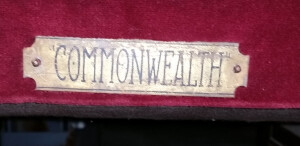   | NOTES: Mahogany chair from the Venetian Gothic Saloon of the steamer COMMONWEALTH. The top rail has an inlaid design. All of the interior cabinet work, furnishings, and decorations were made by Pottier & Stymus Company in New York city. NOTES: See the attached pamphlet by William King Covell, Wilkinson Press, Inc., Newport, Rhode Island, January 1955. The paper “The Steamer Commonwealth,” by Warren T. Berry and J. Howland Gardner, published by the Society of Naval Architects and Marine Engineers, New York, 1908, is the chief source of the notes in this leaflet. Information has been contributed by Elwin M. Eldredge and by other friends. This is the fourteenth of a series of leaflets devoted to steamboats of Long Island Sound. Four hundred copies were printed by the Wilkinson Press, Inc., of Newport, in the month of January 1955. See the attached article published in The New York Architect, published by The Harwell-Evans Company, New York, Vol. 2, July 1908, No. 7. It includes an editorial of the steamer Commonwealth and a discussion of the interior treatment, decoration and furnishing of the Commonwealth. It includes interior and exterior images of the boat and plans. NOTES: The Fall River Line was a famous and long-running passenger transportation service (1847–1937) that connected New York City and Boston via a combination of overnight steamboat travel along Long Island Sound (and Narragansett Bay) and rail connections. Passengers typically took a night boat from New York to Fall River, Massachusetts, then continued by train to Boston (or vice versa), making it a luxurious and popular "rail-water" route, especially during the Gilded Age. The company was founded by Richard Borden who began a regular steamboat service between New York City and Fall River in 1847 (the Bay State Steamboat Company/Bay State Line). In 1863 the Bay State Steamboat Company was sold to the Boston, Newport and New York Steamboat Company, and the railroad was extended between Fall River and Newport, Rhode Island. In 1869 the line was sold to the Narragansett Steamboat Company (Narragansett Steamship Company). In 1872 the Fall River Line was completely reorganized and became part of the Old Colony Railroad, under the name Old Colony Steamboat Company. In 1893, the Fall River Line became part of the New York, New Haven and Hartford Railroad (commonly called the New Haven Railroad). Under this railroad's influence, the steamboat operations (including the prominent Fall River Line) were reorganized and operated through the New England Navigation Company (organized January 1, 1905, the Fall River Line became a division in 1906). By the early 1910s (evidenced by references like 1913 stock certificates and reports), operations and marketing increasingly used New England Steamship Company (often abbreviated N.E.S.S. Co.). The shift to the new name likely occurred gradually between 1905 and 1910, with the name "New England Steamship Company" becoming the primary public and operational identity by the late 1900s/early 1910s. No single "renaming date" is pinpointed in primary sources, but the effective transition to the Steamship Company name for day-to-day branding and management was complete by around 1910–1912. The New England Steamship Company directly managed and marketed the Fall River Line's fleet of elegant side-wheel steamships (such as the Pilgrim, Priscilla, Puritan, Commonwealth, and Providence). After its employees went on strike in the middle of 1937, the company chose, in the face of ongoing losses due to land transportation, to liquidate rather than negotiate with the union. Vessels operated by the line: Bay State (1847), Massachusetts (1847), Empire state (1848), State of Maine (acquired 1849), Metropolis (1854), Old Colony (1865), Newport (1865), Bristol (1867, acquired 1869), Providence (1867, acquired 1869) Pilgrim (1883), City of Fall River (1883, freighter), City of Brockton (1886, freighter), Puritan (1889), Plymouth (1890; rebuilt 1906-1907), City of Taunton (1892, freighter), Priscilla (1894), Providence (1905), and Commonwealth (1908). VESSEL INFORMATION - VESSEL NAME: COMMONWEALTH VESSEL BUILT: 1908 SERVICE DATES: July 1, 1908-1937 VESSEL TYPE: SIDE-WHEEL STEAMBOAT SHIPBUILDERS: WILLIAM CRAMP & SONS BUILDERLOCATION: PENNSYLVANIA, PHILADELPHIA SHIP LINE: FALL RIVER LINE SHIP OWNER: NEW ENGLAND STEAM SHIP COMPANY VESSEL DIMENSIONS: 5,980 tons, 437'9" x 55' x 19'3" FATE: Scrapped in Baltimore, Maryland in 1938. VESSEL HISTORY: The Fall River Line became a division of the New England Navigation Company in 1906. [Description pulled from the Fall River Globe, June 23, 1908, page 8] The $2,000,000, four-decked, 456-foot long side-wheel steamboat Commonwealth was last vessel added to the line (1908). It was the largest of the sound steamer ever built (known as the ‘Giantess of the Sound’). Commonwealth’s interior decoration was created by Pottier and Stymus Company of New York and featured several different architectural styles, for example, a Louis XVI style dining room and the adjoining café in Italian Renaissance. The vessel could accommodate 2000. Some of the rooms “are of regal luxury, arranged in suites with baths.” The double-skilled hull was steel and divided into water-tight compartments. After of the lobby was a library, or social hall, fitted with mahogany bookcases decorated with gilded composition. The barber shop is in old ivory, gilded; the men’s café and the purser’s room off the quarter deck, are in oak ornamentation in color. The grand saloon in Venetian, Gothic vaulted, with artistic ornamentation and color decorations in each section of the vaulting. Aft of the grand salon and separated from by portieres is a Louis XV saloon in old ivory, and on the gallery deck above an Adams saloon in prima vera. Forward of the saloon deck is an Empire saloon in mahogany with gilded ornaments, and on the gallery deck a Louis XVI saloon in solid color with gilded ornamentations. The Commonwealth’s engines are of triple expansion inclined pattern, with no walking beam, with about 3000 horse-power. The paddle wheels are constructed with feathering buckets. On the night of September 26, 1908 the cargo ship Volund collided in dense fog with the Commonwealth off Race Rock off eastern Long Island, between Fisher’s Island and Plum Island. The Commonwealth rescued all 16 people from Volund. In a heavy fog in 1912, the Commonwealth rammed and badly dented the new armored dreadnaught New Hampshire. After the employees of the Fall River Line went on strike in the middle of 1937, the company chose, in the face of ongoing losses due to land transportation, to liquidate the company rather than negotiate with the union. The remaining vessels (Plymouth, Priscilla, Providence and Commonwealth) were sold for $88,000 and were towed to Baltimore and scrapped. | CL79 | |||||||
| 30 | 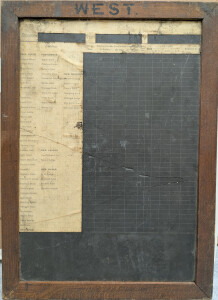 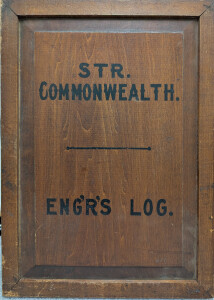 | SHORT DESCRIPTION: Engineer's Log. Wood framed slate with decorative wood back panel painted with the ship's name. The slate has a sheet of paper from an engineer's log pasted onto the surface. The visible portions of the slate has been inscibed with columns and rows. NOTES: See the attached pamphlet by William King Covell, Wilkinson Press, Inc., Newport, Rhode Island, January 1955. The paper “The Steamer Commonwealth,” by Warren T. Berry and J. Howland Gardner, published by the Society of Naval Architects and Marine Engineers, New York, 1908, is the chief source of the notes in this leaflet. Information has been contributed by Elwin M. Eldredge and by other friends. This is the fourteenth of a series of leaflets devoted to steamboats of Long Island Sound. Four hundred copies were printed by the Wilkinson Press, Inc., of Newport, in the month of January 1955. See the attached article published in The New York Architect, published by The Harwell-Evans Company, New York, Vol. 2, July 1908, No. 7. It includes an editorial of the steamer Commonwealth and a discussion of the interior treatment, decoration and furnishing of the Commonwealth. It includes interior and exterior images of the boat and plans. NOTES: The Fall River Line was a famous and long-running passenger transportation service (1847–1937) that connected New York City and Boston via a combination of overnight steamboat travel along Long Island Sound (and Narragansett Bay) and rail connections. Passengers typically took a night boat from New York to Fall River, Massachusetts, then continued by train to Boston (or vice versa), making it a luxurious and popular "rail-water" route, especially during the Gilded Age. The company was founded by Richard Borden who began a regular steamboat service between New York City and Fall River in 1847 (the Bay State Steamboat Company/Bay State Line). In 1863 the Bay State Steamboat Company was sold to the Boston, Newport and New York Steamboat Company, and the railroad was extended between Fall River and Newport, Rhode Island. In 1869 the line was sold to the Narragansett Steamboat Company (Narragansett Steamship Company). In 1872 the Fall River Line was completely reorganized and became part of the Old Colony Railroad, under the name Old Colony Steamboat Company. In 1893, the Fall River Line became part of the New York, New Haven and Hartford Railroad (commonly called the New Haven Railroad). Under this railroad's influence, the steamboat operations (including the prominent Fall River Line) were reorganized and operated through the New England Navigation Company (organized January 1, 1905, the Fall River Line became a division in 1906). By the early 1910s (evidenced by references like 1913 stock certificates and reports), operations and marketing increasingly used New England Steamship Company (often abbreviated N.E.S.S. Co.). The shift to the new name likely occurred gradually between 1905 and 1910, with the name "New England Steamship Company" becoming the primary public and operational identity by the late 1900s/early 1910s. No single "renaming date" is pinpointed in primary sources, but the effective transition to the Steamship Company name for day-to-day branding and management was complete by around 1910–1912. The New England Steamship Company directly managed and marketed the Fall River Line's fleet of elegant side-wheel steamships (such as the Pilgrim, Priscilla, Puritan, Commonwealth, and Providence). After its employees went on strike in the middle of 1937, the company chose, in the face of ongoing losses due to land transportation, to liquidate rather than negotiate with the union. Vessels operated by the line: Bay State (1847), Massachusetts (1847), Empire state (1848), State of Maine (acquired 1849), Metropolis (1854), Old Colony (1865), Newport (1865), Bristol (1867, acquired 1869), Providence (1867, acquired 1869), Pilgrim (1883), City of Fall River (1883, freighter), City of Brockton (1886, freighter), Puritan (1889), Plymouth (1890; rebuilt 1906-1907), City of Taunton (1892, freighter), Priscilla (1894), Providence (1905), and Commonwealth (1908). VESSEL INFORMATION - VESSEL NAME: COMMONWEALTH VESSEL BUILT: 1908 SERVICE DATES: July 1, 1908-1937 VESSEL TYPE: SIDE-WHEEL STEAMBOAT SHIPBUILDERS: WILLIAM CRAMP & SONS BUILDERLOCATION: PENNSYLVANIA, PHILADELPHIA SHIP LINE: FALL RIVER LINE SHIP OWNER: NEW ENGLAND STEAM SHIP COMPANY VESSEL DIMENSIONS: 5,980 tons, 437'9" x 55' x 19'3" FATE: Scrapped in Baltimore, Maryland in 1938. VESSEL HISTORY: The Fall River Line became a division of the New England Navigation Company in 1906. [Description pulled from the Fall River Globe, June 23, 1908, page 8] The $2,000,000, four-decked, 456-foot long side-wheel steamboat Commonwealth was last vessel added to the line (1908). It was the largest of the sound steamer ever built (known as the ‘Giantess of the Sound’). Commonwealth’s interior decoration was created by Pottier and Stymus Company of New York and featured several different architectural styles, for example, a Louis XVI style dining room and the adjoining café in Italian Renaissance. The vessel could accommodate 2000. Some of the rooms “are of regal luxury, arranged in suites with baths.” The double-skilled hull was steel and divided into water-tight compartments. After of the lobby was a library, or social hall, fitted with mahogany bookcases decorated with gilded composition. The barber shop is in old ivory, gilded; the men’s café and the purser’s room off the quarter deck, are in oak ornamentation in color. The grand saloon in Venetian, Gothic vaulted, with artistic ornamentation and color decorations in each section of the vaulting. Aft of the grand salon and separated from by portieres is a Louis XV saloon in old ivory, and on the gallery deck above an Adams saloon in prima vera. Forward of the saloon deck is an Empire saloon in mahogany with gilded ornaments, and on the gallery deck a Louis XVI saloon in solid color with gilded ornamentations. The Commonwealth’s engines are of triple expansion inclined pattern, with no walking beam, with about 3000 horse-power. The paddle wheels are constructed with feathering buckets. On the night of September 26, 1908 the cargo ship Volund collided in dense fog with the Commonwealth off Race Rock off eastern Long Island, between Fisher’s Island and Plum Island. The Commonwealth rescued all 16 people from Volund. In a heavy fog in 1912, the Commonwealth rammed and badly dented the new armored dreadnaught New Hampshire. After the employees of the Fall River Line went on strike in the middle of 1937, the company chose, in the face of ongoing losses due to land transportation, to liquidate the company rather than negotiate with the union. The remaining vessels (Plymouth, Priscilla, Providence and Commonwealth) were sold for $88,000 and were towed to Baltimore and scrapped. | CL3267 | |||||||
| 31 | 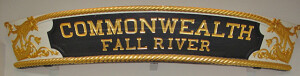 | NOTES: See the attached pamphlet by William King Covell, Wilkinson Press, Inc., Newport, Rhode Island, January 1955. The paper “The Steamer Commonwealth,” by Warren T. Berry and J. Howland Gardner, published by the Society of Naval Architects and Marine Engineers, New York, 1908, is the chief source of the notes in this leaflet. Information has been contributed by Elwin M. Eldredge and by other friends. This is the fourteenth of a series of leaflets devoted to steamboats of Long Island Sound. Four hundred copies were printed by the Wilkinson Press, Inc., of Newport, in the month of January 1955. See the attached article published in The New York Architect, published by The Harwell-Evans Company, New York, Vol. 2, July 1908, No. 7. It includes an editorial of the steamer Commonwealth and a discussion of the interior treatment, decoration and furnishing of the Commonwealth. It includes interior and exterior images of the boat and plans. NOTES: The Fall River Line was a famous and long-running passenger transportation service (1847–1937) that connected New York City and Boston via a combination of overnight steamboat travel along Long Island Sound (and Narragansett Bay) and rail connections. Passengers typically took a night boat from New York to Fall River, Massachusetts, then continued by train to Boston (or vice versa), making it a luxurious and popular "rail-water" route, especially during the Gilded Age. The company was founded by Richard Borden who began a regular steamboat service between New York City and Fall River in 1847 (the Bay State Steamboat Company/Bay State Line). In 1863 the Bay State Steamboat Company was sold to the Boston, Newport and New York Steamboat Company, and the railroad was extended between Fall River and Newport, Rhode Island. In 1869 the line was sold to the Narragansett Steamboat Company (Narragansett Steamship Company). In 1872 the Fall River Line was completely reorganized and became part of the Old Colony Railroad, under the name Old Colony Steamboat Company. In 1893, the Fall River Line became part of the New York, New Haven and Hartford Railroad (commonly called the New Haven Railroad). Under this railroad's influence, the steamboat operations (including the prominent Fall River Line) were reorganized and operated through the New England Navigation Company (organized January 1, 1905, the Fall River Line became a division in 1906). By the early 1910s (evidenced by references like 1913 stock certificates and reports), operations and marketing increasingly used New England Steamship Company (often abbreviated N.E.S.S. Co.). The shift to the new name likely occurred gradually between 1905 and 1910, with the name "New England Steamship Company" becoming the primary public and operational identity by the late 1900s/early 1910s. No single "renaming date" is pinpointed in primary sources, but the effective transition to the Steamship Company name for day-to-day branding and management was complete by around 1910–1912. The New England Steamship Company directly managed and marketed the Fall River Line's fleet of elegant side-wheel steamships (such as the Pilgrim, Priscilla, Puritan, Commonwealth, and Providence). After its employees went on strike in the middle of 1937, the company chose, in the face of ongoing losses due to land transportation, to liquidate rather than negotiate with the union. Vessels operated by the line: Bay State (1847), Massachusetts (1847), Empire state (1848), State of Maine (acquired 1849), Metropolis (1854), Old Colony (1865), Newport (1865), Bristol (1867, acquired 1869), Providence (1867, acquired 1869), Pilgrim (1883), City of Fall River (1883, freighter), City of Brockton (1886, freighter), Puritan (1889), Plymouth (1890; rebuilt 1906-1907), City of Taunton (1892, freighter), Priscilla (1894), Providence (1905), and Commonwealth (1908). VESSEL INFORMATION - VESSEL NAME: COMMONWEALTH VESSEL BUILT: 1908 SERVICE DATES: July 1, 1908-1937 VESSEL TYPE: SIDE-WHEEL STEAMBOAT SHIPBUILDERS: WILLIAM CRAMP & SONS BUILDERLOCATION: PENNSYLVANIA, PHILADELPHIA SHIP LINE: FALL RIVER LINE SHIP OWNER: NEW ENGLAND STEAM SHIP COMPANY VESSEL DIMENSIONS: 5,980 tons, 437'9" x 55' x 19'3" FATE: Scrapped in Baltimore, Maryland in 1938. VESSEL HISTORY: The Fall River Line became a division of the New England Navigation Company in 1906. [Description pulled from the Fall River Globe, June 23, 1908, page 8] The $2,000,000, four-decked, 456-foot long side-wheel steamboat Commonwealth was last vessel added to the line (1908). It was the largest of the sound steamer ever built (known as the ‘Giantess of the Sound’). Commonwealth’s interior decoration was created by Pottier and Stymus Company of New York and featured several different architectural styles, for example, a Louis XVI style dining room and the adjoining café in Italian Renaissance. The vessel could accommodate 2000. Some of the rooms “are of regal luxury, arranged in suites with baths.” The double-skilled hull was steel and divided into water-tight compartments. After of the lobby was a library, or social hall, fitted with mahogany bookcases decorated with gilded composition. The barber shop is in old ivory, gilded; the men’s café and the purser’s room off the quarter deck, are in oak ornamentation in color. The grand saloon in Venetian, Gothic vaulted, with artistic ornamentation and color decorations in each section of the vaulting. Aft of the grand salon and separated from by portieres is a Louis XV saloon in old ivory, and on the gallery deck above an Adams saloon in prima vera. Forward of the saloon deck is an Empire saloon in mahogany with gilded ornaments, and on the gallery deck a Louis XVI saloon in solid color with gilded ornamentations. The Commonwealth’s engines are of triple expansion inclined pattern, with no walking beam, with about 3000 horse-power. The paddle wheels are constructed with feathering buckets. On the night of September 26, 1908 the cargo ship Volund collided in dense fog with the Commonwealth off Race Rock off eastern Long Island, between Fisher’s Island and Plum Island. The Commonwealth rescued all 16 people from Volund. In a heavy fog in 1912, the Commonwealth rammed and badly dented the new armored dreadnaught New Hampshire. After the employees of the Fall River Line went on strike in the middle of 1937, the company chose, in the face of ongoing losses due to land transportation, to liquidate the company rather than negotiate with the union. The remaining vessels (Plymouth, Priscilla, Providence and Commonwealth) were sold for $88,000 and were towed to Baltimore and scrapped. | CL3885 | |||||||
| 32 | 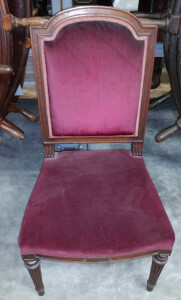  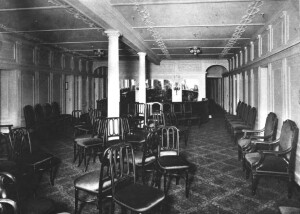 | NOTES: Chair from the Louis XVI saloon of the COMMONWEALTH. All of the interior cabinet work, furnishings, and decorations were made by Pottier & Stymus Company in New York city. NOTES: See the attached pamphlet by William King Covell, Wilkinson Press, Inc., Newport, Rhode Island, January 1955. The paper “The Steamer Commonwealth,” by Warren T. Berry and J. Howland Gardner, published by the Society of Naval Architects and Marine Engineers, New York, 1908, is the chief source of the notes in this leaflet. Information has been contributed by Elwin M. Eldredge and by other friends. This is the fourteenth of a series of leaflets devoted to steamboats of Long Island Sound. Four hundred copies were printed by the Wilkinson Press, Inc., of Newport, in the month of January 1955. See the attached article published in The New York Architect, published by The Harwell-Evans Company, New York, Vol. 2, July 1908, No. 7. It includes an editorial of the steamer Commonwealth and a discussion of the interior treatment, decoration and furnishing of the Commonwealth. It includes interior and exterior images of the boat and plans. NOTES: The Fall River Line was a famous and long-running passenger transportation service (1847–1937) that connected New York City and Boston via a combination of overnight steamboat travel along Long Island Sound (and Narragansett Bay) and rail connections. Passengers typically took a night boat from New York to Fall River, Massachusetts, then continued by train to Boston (or vice versa), making it a luxurious and popular "rail-water" route, especially during the Gilded Age. The company was founded by Richard Borden who began a regular steamboat service between New York City and Fall River in 1847 (the Bay State Steamboat Company/Bay State Line). In 1863 the Bay State Steamboat Company was sold to the Boston, Newport and New York Steamboat Company, and the railroad was extended between Fall River and Newport, Rhode Island. In 1869 the line was sold to the Narragansett Steamboat Company (Narragansett Steamship Company). In 1872 the Fall River Line was completely reorganized and became part of the Old Colony Railroad, under the name Old Colony Steamboat Company. In 1893, the Fall River Line became part of the New York, New Haven and Hartford Railroad (commonly called the New Haven Railroad). Under this railroad's influence, the steamboat operations (including the prominent Fall River Line) were reorganized and operated through the New England Navigation Company (organized January 1, 1905, the Fall River Line became a division in 1906). By the early 1910s (evidenced by references like 1913 stock certificates and reports), operations and marketing increasingly used New England Steamship Company (often abbreviated N.E.S.S. Co.). The shift to the new name likely occurred gradually between 1905 and 1910, with the name "New England Steamship Company" becoming the primary public and operational identity by the late 1900s/early 1910s. No single "renaming date" is pinpointed in primary sources, but the effective transition to the Steamship Company name for day-to-day branding and management was complete by around 1910–1912. The New England Steamship Company directly managed and marketed the Fall River Line's fleet of elegant side-wheel steamships (such as the Pilgrim, Priscilla, Puritan, Commonwealth, and Providence). After its employees went on strike in the middle of 1937, the company chose, in the face of ongoing losses due to land transportation, to liquidate rather than negotiate with the union. Vessels operated by the line: Bay State (1847), Massachusetts (1847), Empire state (1848), State of Maine (acquired 1849), Metropolis (1854), Old Colony (1865), Newport (1865), Bristol (1867, acquired 1869), Providence (1867, acquired 1869) Pilgrim (1883), City of Fall River (1883, freighter), City of Brockton (1886, freighter), Puritan (1889), Plymouth (1890; rebuilt 1906-1907), City of Taunton (1892, freighter), Priscilla (1894), Providence (1905), and Commonwealth (1908). VESSEL INFORMATION - VESSEL NAME: COMMONWEALTH VESSEL BUILT: 1908 SERVICE DATES: July 1, 1908-1937 VESSEL TYPE: SIDE-WHEEL STEAMBOAT SHIPBUILDERS: WILLIAM CRAMP & SONS BUILDERLOCATION: PENNSYLVANIA, PHILADELPHIA SHIP LINE: FALL RIVER LINE SHIP OWNER: NEW ENGLAND STEAM SHIP COMPANY VESSEL DIMENSIONS: 5,980 tons, 437'9" x 55' x 19'3" FATE: Scrapped in Baltimore, Maryland in 1938. VESSEL HISTORY: The Fall River Line became a division of the New England Navigation Company in 1906. [Description pulled from the Fall River Globe, June 23, 1908, page 8] The $2,000,000, four-decked, 456-foot long side-wheel steamboat Commonwealth was last vessel added to the line (1908). It was the largest of the sound steamer ever built (known as the ‘Giantess of the Sound’). Commonwealth’s interior decoration was created by Pottier and Stymus Company of New York and featured several different architectural styles, for example, a Louis XVI style dining room and the adjoining café in Italian Renaissance. The vessel could accommodate 2000. Some of the rooms “are of regal luxury, arranged in suites with baths.” The double-skilled hull was steel and divided into water-tight compartments. After of the lobby was a library, or social hall, fitted with mahogany bookcases decorated with gilded composition. The barber shop is in old ivory, gilded; the men’s café and the purser’s room off the quarter deck, are in oak ornamentation in color. The grand saloon in Venetian, Gothic vaulted, with artistic ornamentation and color decorations in each section of the vaulting. Aft of the grand salon and separated from by portieres is a Louis XV saloon in old ivory, and on the gallery deck above an Adams saloon in prima vera. Forward of the saloon deck is an Empire saloon in mahogany with gilded ornaments, and on the gallery deck a Louis XVI saloon in solid color with gilded ornamentations. The Commonwealth’s engines are of triple expansion inclined pattern, with no walking beam, with about 3000 horse-power. The paddle wheels are constructed with feathering buckets. On the night of September 26, 1908 the cargo ship Volund collided in dense fog with the Commonwealth off Race Rock off eastern Long Island, between Fisher’s Island and Plum Island. The Commonwealth rescued all 16 people from Volund. In a heavy fog in 1912, the Commonwealth rammed and badly dented the new armored dreadnaught New Hampshire. After the employees of the Fall River Line went on strike in the middle of 1937, the company chose, in the face of ongoing losses due to land transportation, to liquidate the company rather than negotiate with the union. The remaining vessels (Plymouth, Priscilla, Providence and Commonwealth) were sold for $88,000 and were towed to Baltimore and scrapped. | CL12 | |||||||
| 33 | 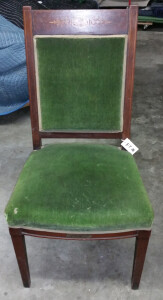 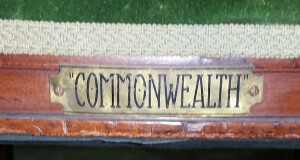 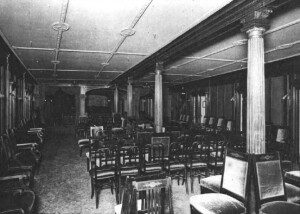 | NOTES: Mahogany chair from the Adam Saloon of the steamer COMMONWEALTH. All of the interior cabinet work, furnishings, and decorations were made by Pottier & Stymus Company in New York city. NOTES: See the attached pamphlet by William King Covell, Wilkinson Press, Inc., Newport, Rhode Island, January 1955. The paper “The Steamer Commonwealth,” by Warren T. Berry and J. Howland Gardner, published by the Society of Naval Architects and Marine Engineers, New York, 1908, is the chief source of the notes in this leaflet. Information has been contributed by Elwin M. Eldredge and by other friends. This is the fourteenth of a series of leaflets devoted to steamboats of Long Island Sound. Four hundred copies were printed by the Wilkinson Press, Inc., of Newport, in the month of January 1955. See the attached article published in The New York Architect, published by The Harwell-Evans Company, New York, Vol. 2, July 1908, No. 7. It includes an editorial of the steamer Commonwealth and a discussion of the interior treatment, decoration and furnishing of the Commonwealth. It includes interior and exterior images of the boat and plans. NOTES: The Fall River Line was a famous and long-running passenger transportation service (1847–1937) that connected New York City and Boston via a combination of overnight steamboat travel along Long Island Sound (and Narragansett Bay) and rail connections. Passengers typically took a night boat from New York to Fall River, Massachusetts, then continued by train to Boston (or vice versa), making it a luxurious and popular "rail-water" route, especially during the Gilded Age. The company was founded by Richard Borden who began a regular steamboat service between New York City and Fall River in 1847 (the Bay State Steamboat Company/Bay State Line). In 1863 the Bay State Steamboat Company was sold to the Boston, Newport and New York Steamboat Company, and the railroad was extended between Fall River and Newport, Rhode Island. In 1869 the line was sold to the Narragansett Steamboat Company (Narragansett Steamship Company). In 1872 the Fall River Line was completely reorganized and became part of the Old Colony Railroad, under the name Old Colony Steamboat Company. In 1893, the Fall River Line became part of the New York, New Haven and Hartford Railroad (commonly called the New Haven Railroad). Under this railroad's influence, the steamboat operations (including the prominent Fall River Line) were reorganized and operated through the New England Navigation Company (organized January 1, 1905, the Fall River Line became a division in 1906). By the early 1910s (evidenced by references like 1913 stock certificates and reports), operations and marketing increasingly used New England Steamship Company (often abbreviated N.E.S.S. Co.). The shift to the new name likely occurred gradually between 1905 and 1910, with the name "New England Steamship Company" becoming the primary public and operational identity by the late 1900s/early 1910s. No single "renaming date" is pinpointed in primary sources, but the effective transition to the Steamship Company name for day-to-day branding and management was complete by around 1910–1912. The New England Steamship Company directly managed and marketed the Fall River Line's fleet of elegant side-wheel steamships (such as the Pilgrim, Priscilla, Puritan, Commonwealth, and Providence). After its employees went on strike in the middle of 1937, the company chose, in the face of ongoing losses due to land transportation, to liquidate rather than negotiate with the union. Vessels operated by the line: Bay State (1847), Massachusetts (1847), Empire state (1848), State of Maine (acquired 1849), Metropolis (1854), Old Colony (1865), Newport (1865), Bristol (1867, acquired 1869), Providence (1867, acquired 1869) Pilgrim (1883), City of Fall River (1883, freighter), City of Brockton (1886, freighter), Puritan (1889), Plymouth (1890; rebuilt 1906-1907), City of Taunton (1892, freighter), Priscilla (1894), Providence (1905), and Commonwealth (1908). VESSEL INFORMATION - VESSEL NAME: COMMONWEALTH VESSEL BUILT: 1908 SERVICE DATES: July 1, 1908-1937 VESSEL TYPE: SIDE-WHEEL STEAMBOAT SHIPBUILDERS: WILLIAM CRAMP & SONS BUILDERLOCATION: PENNSYLVANIA, PHILADELPHIA SHIP LINE: FALL RIVER LINE SHIP OWNER: NEW ENGLAND STEAM SHIP COMPANY VESSEL DIMENSIONS: 5,980 tons, 437'9" x 55' x 19'3" FATE: Scrapped in Baltimore, Maryland in 1938. VESSEL HISTORY: The Fall River Line became a division of the New England Navigation Company in 1906. [Description pulled from the Fall River Globe, June 23, 1908, page 8] The $2,000,000, four-decked, 456-foot long side-wheel steamboat Commonwealth was last vessel added to the line (1908). It was the largest of the sound steamer ever built (known as the ‘Giantess of the Sound’). Commonwealth’s interior decoration was created by Pottier and Stymus Company of New York and featured several different architectural styles, for example, a Louis XVI style dining room and the adjoining café in Italian Renaissance. The vessel could accommodate 2000. Some of the rooms “are of regal luxury, arranged in suites with baths.” The double-skilled hull was steel and divided into water-tight compartments. After of the lobby was a library, or social hall, fitted with mahogany bookcases decorated with gilded composition. The barber shop is in old ivory, gilded; the men’s café and the purser’s room off the quarter deck, are in oak ornamentation in color. The grand saloon in Venetian, Gothic vaulted, with artistic ornamentation and color decorations in each section of the vaulting. Aft of the grand salon and separated from by portieres is a Louis XV saloon in old ivory, and on the gallery deck above an Adams saloon in prima vera. Forward of the saloon deck is an Empire saloon in mahogany with gilded ornaments, and on the gallery deck a Louis XVI saloon in solid color with gilded ornamentations. The Commonwealth’s engines are of triple expansion inclined pattern, with no walking beam, with about 3000 horse-power. The paddle wheels are constructed with feathering buckets. On the night of September 26, 1908 the cargo ship Volund collided in dense fog with the Commonwealth off Race Rock off eastern Long Island, between Fisher’s Island and Plum Island. The Commonwealth rescued all 16 people from Volund. In a heavy fog in 1912, the Commonwealth rammed and badly dented the new armored dreadnaught New Hampshire. After the employees of the Fall River Line went on strike in the middle of 1937, the company chose, in the face of ongoing losses due to land transportation, to liquidate the company rather than negotiate with the union. The remaining vessels (Plymouth, Priscilla, Providence and Commonwealth) were sold for $88,000 and were towed to Baltimore and scrapped. | CL80 | |||||||
| 34 | 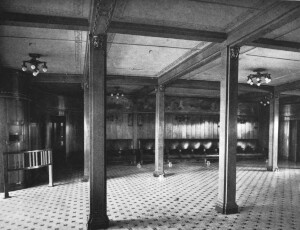 | SHORT DESCRIPTION: Marquetry panel of a female Art Nouveau figure with her hand on a large ship's wheel. The panel came from the steamboat Commonwealth (1908). All of the interior cabinet work, furnishings, and decorations were made by Pottier & Stymus Company in New York city. NOTES: According to the journal The New York Architect, July 1908 the lobby of the quarterdeck of the steamer Commonwealth was decorated thusly: Around this lobby is a high wainscoting, in oak, finished natural, enriched with decorative marquetry panels in which appear female figures, symbolizing Navigation, Commerce, Art and Industry. NOTES: See the attached pamphlet by William King Covell, Wilkinson Press, Inc., Newport, Rhode Island, January 1955. The paper “The Steamer Commonwealth,” by Warren T. Berry and J. Howland Gardner, published by the Society of Naval Architects and Marine Engineers, New York, 1908, is the chief source of the notes in this leaflet. Information has been contributed by Elwin M. Eldredge and by other friends. This is the fourteenth of a series of leaflets devoted to steamboats of Long Island Sound. Four hundred copies were printed by the Wilkinson Press, Inc., of Newport, in the month of January 1955. See the attached article published in The New York Architect, published by The Harwell-Evans Company, New York, Vol. 2, July 1908, No. 7. It includes an editorial of the steamer Commonwealth and a discussion of the interior treatment, decoration and furnishing of the Commonwealth. It includes interior and exterior images of the boat and plans. NOTES: The Fall River Line was a famous and long-running passenger transportation service (1847–1937) that connected New York City and Boston via a combination of overnight steamboat travel along Long Island Sound (and Narragansett Bay) and rail connections. Passengers typically took a night boat from New York to Fall River, Massachusetts, then continued by train to Boston (or vice versa), making it a luxurious and popular "rail-water" route, especially during the Gilded Age. The company was founded by Richard Borden who began a regular steamboat service between New York City and Fall River in 1847 (the Bay State Steamboat Company/Bay State Line). In 1863 the Bay State Steamboat Company was sold to the Boston, Newport and New York Steamboat Company, and the railroad was extended between Fall River and Newport, Rhode Island. In 1869 the line was sold to the Narragansett Steamboat Company (Narragansett Steamship Company). In 1872 the Fall River Line was completely reorganized and became part of the Old Colony Railroad, under the name Old Colony Steamboat Company. In 1893, the Fall River Line became part of the New York, New Haven and Hartford Railroad (commonly called the New Haven Railroad). Under this railroad's influence, the steamboat operations (including the prominent Fall River Line) were reorganized and operated through the New England Navigation Company (organized January 1, 1905, the Fall River Line became a division in 1906). By the early 1910s (evidenced by references like 1913 stock certificates and reports), operations and marketing increasingly used New England Steamship Company (often abbreviated N.E.S.S. Co.). The shift to the new name likely occurred gradually between 1905 and 1910, with the name "New England Steamship Company" becoming the primary public and operational identity by the late 1900s/early 1910s. No single "renaming date" is pinpointed in primary sources, but the effective transition to the Steamship Company name for day-to-day branding and management was complete by around 1910–1912. The New England Steamship Company directly managed and marketed the Fall River Line's fleet of elegant side-wheel steamships (such as the Pilgrim, Priscilla, Puritan, Commonwealth, and Providence). After its employees went on strike in the middle of 1937, the company chose, in the face of ongoing losses due to land transportation, to liquidate rather than negotiate with the union. Vessels operated by the line: Bay State (1847), Massachusetts (1847), Empire state (1848), State of Maine (acquired 1849), Metropolis (1854), Old Colony (1865), Newport (1865), Bristol (1867, acquired 1869), Providence (1867, acquired 1869), Pilgrim (1883), City of Fall River (1883, freighter), City of Brockton (1886, freighter), Puritan (1889), Plymouth (1890; rebuilt 1906-1907), City of Taunton (1892, freighter), Priscilla (1894), Providence (1905), and Commonwealth (1908). VESSEL INFORMATION - VESSEL NAME: COMMONWEALTH VESSEL BUILT: 1908 SERVICE DATES: July 1, 1908-1937 VESSEL TYPE: SIDE-WHEEL STEAMBOAT SHIPBUILDERS: WILLIAM CRAMP & SONS BUILDERLOCATION: PENNSYLVANIA, PHILADELPHIA SHIP LINE: FALL RIVER LINE SHIP OWNER: NEW ENGLAND STEAM SHIP COMPANY VESSEL DIMENSIONS: 5,980 tons, 437'9" x 55' x 19'3" FATE: Scrapped in Baltimore, Maryland in 1938. VESSEL HISTORY: The Fall River Line became a division of the New England Navigation Company in 1906. [Description pulled from the Fall River Globe, June 23, 1908, page 8] The $2,000,000, four-decked, 456-foot long side-wheel steamboat Commonwealth was last vessel added to the line (1908). It was the largest of the sound steamer ever built (known as the ‘Giantess of the Sound’). Commonwealth’s interior decoration was created by Pottier and Stymus Company of New York and featured several different architectural styles, for example, a Louis XVI style dining room and the adjoining café in Italian Renaissance. The vessel could accommodate 2000. Some of the rooms “are of regal luxury, arranged in suites with baths.” The double-skilled hull was steel and divided into water-tight compartments. After of the lobby was a library, or social hall, fitted with mahogany bookcases decorated with gilded composition. The barber shop is in old ivory, gilded; the men’s café and the purser’s room off the quarter deck, are in oak ornamentation in color. The grand saloon in Venetian, Gothic vaulted, with artistic ornamentation and color decorations in each section of the vaulting. Aft of the grand salon and separated from by portieres is a Louis XV saloon in old ivory, and on the gallery deck above an Adams saloon in prima vera. Forward of the saloon deck is an Empire saloon in mahogany with gilded ornaments, and on the gallery deck a Louis XVI saloon in solid color with gilded ornamentations. The Commonwealth’s engines are of triple expansion inclined pattern, with no walking beam, with about 3000 horse-power. The paddle wheels are constructed with feathering buckets. On the night of September 26, 1908 the cargo ship Volund collided in dense fog with the Commonwealth off Race Rock off eastern Long Island, between Fisher’s Island and Plum Island. The Commonwealth rescued all 16 people from Volund. In a heavy fog in 1912, the Commonwealth rammed and badly dented the new armored dreadnaught New Hampshire. After the employees of the Fall River Line went on strike in the middle of 1937, the company chose, in the face of ongoing losses due to land transportation, to liquidate the company rather than negotiate with the union. The remaining vessels (Plymouth, Priscilla, Providence and Commonwealth) were sold for $88,000 and were towed to Baltimore and scrapped. | CL4118 | |||||||
| 35 | 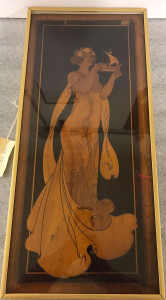 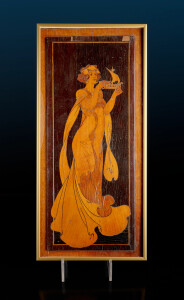 | SHORT DESCRIPTION: Marquetry panel of a female Art Nouveau figure holding a small boat model. The panel came from the steamboat Commonwealth (1908). All of the interior cabinet work, furnishings, and decorations were made by Pottier & Stymus Company in New York city. NOTES: According to the journal The New York Architect, July 1908 the lobby of the quarterdeck of the steamer Commonwealth was decorated thusly: Around this lobby is a high wainscoting, in oak, finished natural, enriched with decorative marquetry panels in which appear female figures, symbolizing Navigation, Commerce, Art and Industry. NOTES: See the attached pamphlet by William King Covell, Wilkinson Press, Inc., Newport, Rhode Island, January 1955. The paper “The Steamer Commonwealth,” by Warren T. Berry and J. Howland Gardner, published by the Society of Naval Architects and Marine Engineers, New York, 1908, is the chief source of the notes in this leaflet. Information has been contributed by Elwin M. Eldredge and by other friends. This is the fourteenth of a series of leaflets devoted to steamboats of Long Island Sound. Four hundred copies were printed by the Wilkinson Press, Inc., of Newport, in the month of January 1955. See the attached article published in The New York Architect, published by The Harwell-Evans Company, New York, Vol. 2, July 1908, No. 7. It includes an editorial of the steamer Commonwealth and a discussion of the interior treatment, decoration and furnishing of the Commonwealth. It includes interior and exterior images of the boat and plans. NOTES: The Fall River Line was a famous and long-running passenger transportation service (1847–1937) that connected New York City and Boston via a combination of overnight steamboat travel along Long Island Sound (and Narragansett Bay) and rail connections. Passengers typically took a night boat from New York to Fall River, Massachusetts, then continued by train to Boston (or vice versa), making it a luxurious and popular "rail-water" route, especially during the Gilded Age. The company was founded by Richard Borden who began a regular steamboat service between New York City and Fall River in 1847 (the Bay State Steamboat Company/Bay State Line). In 1863 the Bay State Steamboat Company was sold to the Boston, Newport and New York Steamboat Company, and the railroad was extended between Fall River and Newport, Rhode Island. In 1869 the line was sold to the Narragansett Steamboat Company (Narragansett Steamship Company). In 1872 the Fall River Line was completely reorganized and became part of the Old Colony Railroad, under the name Old Colony Steamboat Company. In 1893, the Fall River Line became part of the New York, New Haven and Hartford Railroad (commonly called the New Haven Railroad). Under this railroad's influence, the steamboat operations (including the prominent Fall River Line) were reorganized and operated through the New England Navigation Company (organized January 1, 1905, the Fall River Line became a division in 1906). By the early 1910s (evidenced by references like 1913 stock certificates and reports), operations and marketing increasingly used New England Steamship Company (often abbreviated N.E.S.S. Co.). The shift to the new name likely occurred gradually between 1905 and 1910, with the name "New England Steamship Company" becoming the primary public and operational identity by the late 1900s/early 1910s. No single "renaming date" is pinpointed in primary sources, but the effective transition to the Steamship Company name for day-to-day branding and management was complete by around 1910–1912. The New England Steamship Company directly managed and marketed the Fall River Line's fleet of elegant side-wheel steamships (such as the Pilgrim, Priscilla, Puritan, Commonwealth, and Providence). After its employees went on strike in the middle of 1937, the company chose, in the face of ongoing losses due to land transportation, to liquidate rather than negotiate with the union. Vessels operated by the line: Bay State (1847), Massachusetts (1847), Empire state (1848), State of Maine (acquired 1849), Metropolis (1854), Old Colony (1865), Newport (1865), Bristol (1867, acquired 1869), Providence (1867, acquired 1869), Pilgrim (1883), City of Fall River (1883, freighter), City of Brockton (1886, freighter), Puritan (1889), Plymouth (1890; rebuilt 1906-1907), City of Taunton (1892, freighter), Priscilla (1894), Providence (1905), and Commonwealth (1908). VESSEL INFORMATION - VESSEL NAME: COMMONWEALTH VESSEL BUILT: 1908 SERVICE DATES: July 1, 1908-1937 VESSEL TYPE: SIDE-WHEEL STEAMBOAT SHIPBUILDERS: WILLIAM CRAMP & SONS BUILDERLOCATION: PENNSYLVANIA, PHILADELPHIA SHIP LINE: FALL RIVER LINE SHIP OWNER: NEW ENGLAND STEAM SHIP COMPANY VESSEL DIMENSIONS: 5,980 tons, 437'9" x 55' x 19'3" FATE: Scrapped in Baltimore, Maryland in 1938. VESSEL HISTORY: The Fall River Line became a division of the New England Navigation Company in 1906. [Description pulled from the Fall River Globe, June 23, 1908, page 8] The $2,000,000, four-decked, 456-foot long side-wheel steamboat Commonwealth was last vessel added to the line (1908). It was the largest of the sound steamer ever built (known as the ‘Giantess of the Sound’). Commonwealth’s interior decoration was created by Pottier and Stymus Company of New York and featured several different architectural styles, for example, a Louis XVI style dining room and the adjoining café in Italian Renaissance. The vessel could accommodate 2000. Some of the rooms “are of regal luxury, arranged in suites with baths.” The double-skilled hull was steel and divided into water-tight compartments. After of the lobby was a library, or social hall, fitted with mahogany bookcases decorated with gilded composition. The barber shop is in old ivory, gilded; the men’s café and the purser’s room off the quarter deck, are in oak ornamentation in color. The grand saloon in Venetian, Gothic vaulted, with artistic ornamentation and color decorations in each section of the vaulting. Aft of the grand salon and separated from by portieres is a Louis XV saloon in old ivory, and on the gallery deck above an Adams saloon in prima vera. Forward of the saloon deck is an Empire saloon in mahogany with gilded ornaments, and on the gallery deck a Louis XVI saloon in solid color with gilded ornamentations. The Commonwealth’s engines are of triple expansion inclined pattern, with no walking beam, with about 3000 horse-power. The paddle wheels are constructed with feathering buckets. On the night of September 26, 1908 the cargo ship Volund collided in dense fog with the Commonwealth off Race Rock off eastern Long Island, between Fisher’s Island and Plum Island. The Commonwealth rescued all 16 people from Volund. In a heavy fog in 1912, the Commonwealth rammed and badly dented the new armored dreadnaught New Hampshire. After the employees of the Fall River Line went on strike in the middle of 1937, the company chose, in the face of ongoing losses due to land transportation, to liquidate the company rather than negotiate with the union. The remaining vessels (Plymouth, Priscilla, Providence and Commonwealth) were sold for $88,000 and were towed to Baltimore and scrapped. | CL4119 | |||||||
| 36 | 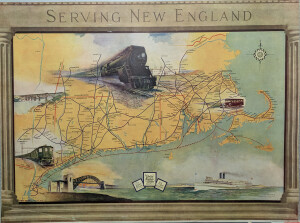 | NOTES: Map drawn by Stephen Jerome Voorhies and printed by Rand McNally for the New England Steamship Company, the New York, New Haven and Hartford Railroad Company, and the New England Transportation Company.Voorhies (1889-1972) was an American commercial artist and cartographer based in New York in the mid-19th century. His advertisements promoted design services for cartoons, illustrations, book jacket designs, map design, poster design, showcards and drawings. This image was used by the companies to decorate calendars. NOTES: See the attached pamphlet by William King Covell, Wilkinson Press, Inc., Newport, Rhode Island, January 1955. The paper “The Steamer Commonwealth,” by Warren T. Berry and J. Howland Gardner, published by the Society of Naval Architects and Marine Engineers, New York, 1908, is the chief source of the notes in this leaflet. Information has been contributed by Elwin M. Eldredge and by other friends. This is the fourteenth of a series of leaflets devoted to steamboats of Long Island Sound. Four hundred copies were printed by the Wilkinson Press, Inc., of Newport, in the month of January 1955. See the attached article published in The New York Architect, published by The Harwell-Evans Company, New York, Vol. 2, July 1908, No. 7. It includes an editorial of the steamer Commonwealth and a discussion of the interior treatment, decoration and furnishing of the Commonwealth. It includes interior and exterior images of the boat and plans. NOTES: The Fall River Line was a famous and long-running passenger transportation service (1847–1937) that connected New York City and Boston via a combination of overnight steamboat travel along Long Island Sound (and Narragansett Bay) and rail connections. Passengers typically took a night boat from New York to Fall River, Massachusetts, then continued by train to Boston (or vice versa), making it a luxurious and popular "rail-water" route, especially during the Gilded Age. The company was founded by Richard Borden who began a regular steamboat service between New York City and Fall River in 1847 (the Bay State Steamboat Company/Bay State Line). In 1863 the Bay State Steamboat Company was sold to the Boston, Newport and New York Steamboat Company, and the railroad was extended between Fall River and Newport, Rhode Island. In 1869 the line was sold to the Narragansett Steamboat Company (Narragansett Steamship Company). In 1872 the Fall River Line was completely reorganized and became part of the Old Colony Railroad, under the name Old Colony Steamboat Company. In 1893, the Fall River Line became part of the New York, New Haven and Hartford Railroad (commonly called the New Haven Railroad). Under this railroad's influence, the steamboat operations (including the prominent Fall River Line) were reorganized and operated through the New England Navigation Company (organized January 1, 1905, the Fall River Line became a division in 1906). By the early 1910s (evidenced by references like 1913 stock certificates and reports), operations and marketing increasingly used New England Steamship Company (often abbreviated N.E.S.S. Co.). The shift to the new name likely occurred gradually between 1905 and 1910, with the name "New England Steamship Company" becoming the primary public and operational identity by the late 1900s/early 1910s. No single "renaming date" is pinpointed in primary sources, but the effective transition to the Steamship Company name for day-to-day branding and management was complete by around 1910–1912. The New England Steamship Company directly managed and marketed the Fall River Line's fleet of elegant side-wheel steamships (such as the Pilgrim, Priscilla, Puritan, Commonwealth, and Providence). After its employees went on strike in the middle of 1937, the company chose, in the face of ongoing losses due to land transportation, to liquidate rather than negotiate with the union. Vessels operated by the line: Bay State (1847), Massachusetts (1847), Empire state (1848), State of Maine (acquired 1849), Metropolis (1854), Old Colony (1865), Newport (1865), Bristol (1867, acquired 1869), Providence (1867, acquired 1869), Pilgrim (1883), City of Fall River (1883, freighter), City of Brockton (1886, freighter), Puritan (1889), Plymouth (1890; rebuilt 1906-1907), City of Taunton (1892, freighter), Priscilla (1894), Providence (1905), and Commonwealth (1908). VESSEL INFORMATION - VESSEL NAME: COMMONWEALTH VESSEL BUILT: 1908 SERVICE DATES: July 1, 1908-1937 VESSEL TYPE: SIDE-WHEEL STEAMBOAT SHIPBUILDERS: WILLIAM CRAMP & SONS BUILDERLOCATION: PENNSYLVANIA, PHILADELPHIA SHIP LINE: FALL RIVER LINE SHIP OWNER: NEW ENGLAND STEAM SHIP COMPANY VESSEL DIMENSIONS: 5,980 tons, 437'9" x 55' x 19'3" FATE: Scrapped in Baltimore, Maryland in 1938. VESSEL HISTORY: The Fall River Line became a division of the New England Navigation Company in 1906. [Description pulled from the Fall River Globe, June 23, 1908, page 8] The $2,000,000, four-decked, 456-foot long side-wheel steamboat Commonwealth was last vessel added to the line (1908). It was the largest of the sound steamer ever built (known as the ‘Giantess of the Sound’). Commonwealth’s interior decoration was created by Pottier and Stymus Company of New York and featured several different architectural styles, for example, a Louis XVI style dining room and the adjoining café in Italian Renaissance. The vessel could accommodate 2000. Some of the rooms “are of regal luxury, arranged in suites with baths.” The double-skilled hull was steel and divided into water-tight compartments. After of the lobby was a library, or social hall, fitted with mahogany bookcases decorated with gilded composition. The barber shop is in old ivory, gilded; the men’s café and the purser’s room off the quarter deck, are in oak ornamentation in color. The grand saloon in Venetian, Gothic vaulted, with artistic ornamentation and color decorations in each section of the vaulting. Aft of the grand salon and separated from by portieres is a Louis XV saloon in old ivory, and on the gallery deck above an Adams saloon in prima vera. Forward of the saloon deck is an Empire saloon in mahogany with gilded ornaments, and on the gallery deck a Louis XVI saloon in solid color with gilded ornamentations. The Commonwealth’s engines are of triple expansion inclined pattern, with no walking beam, with about 3000 horse-power. The paddle wheels are constructed with feathering buckets. On the night of September 26, 1908 the cargo ship Volund collided in dense fog with the Commonwealth off Race Rock off eastern Long Island, between Fisher’s Island and Plum Island. The Commonwealth rescued all 16 people from Volund. In a heavy fog in 1912, the Commonwealth rammed and badly dented the new armored dreadnaught New Hampshire. After the employees of the Fall River Line went on strike in the middle of 1937, the company chose, in the face of ongoing losses due to land transportation, to liquidate the company rather than negotiate with the union. The remaining vessels (Plymouth, Priscilla, Providence and Commonwealth) were sold for $88,000 and were towed to Baltimore and scrapped. | CL9759 | |||||||
| 37 | 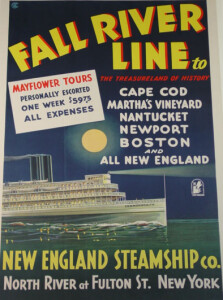 | NOTES: See the attached pamphlet by William King Covell, Wilkinson Press, Inc., Newport, Rhode Island, January 1955. The paper “The Steamer Commonwealth,” by Warren T. Berry and J. Howland Gardner, published by the Society of Naval Architects and Marine Engineers, New York, 1908, is the chief source of the notes in this leaflet. Information has been contributed by Elwin M. Eldredge and by other friends. This is the fourteenth of a series of leaflets devoted to steamboats of Long Island Sound. Four hundred copies were printed by the Wilkinson Press, Inc., of Newport, in the month of January 1955. See the attached article published in The New York Architect, published by The Harwell-Evans Company, New York, Vol. 2, July 1908, No. 7. It includes an editorial of the steamer Commonwealth and a discussion of the interior treatment, decoration and furnishing of the Commonwealth. It includes interior and exterior images of the boat and plans. NOTES: The Fall River Line was a famous and long-running passenger transportation service (1847–1937) that connected New York City and Boston via a combination of overnight steamboat travel along Long Island Sound (and Narragansett Bay) and rail connections. Passengers typically took a night boat from New York to Fall River, Massachusetts, then continued by train to Boston (or vice versa), making it a luxurious and popular "rail-water" route, especially during the Gilded Age. The company was founded by Richard Borden who began a regular steamboat service between New York City and Fall River in 1847 (the Bay State Steamboat Company/Bay State Line). In 1863 the Bay State Steamboat Company was sold to the Boston, Newport and New York Steamboat Company, and the railroad was extended between Fall River and Newport, Rhode Island. In 1869 the line was sold to the Narragansett Steamboat Company (Narragansett Steamship Company). In 1872 the Fall River Line was completely reorganized and became part of the Old Colony Railroad, under the name Old Colony Steamboat Company. In 1893, the Fall River Line became part of the New York, New Haven and Hartford Railroad (commonly called the New Haven Railroad). Under this railroad's influence, the steamboat operations (including the prominent Fall River Line) were reorganized and operated through the New England Navigation Company (organized January 1, 1905, the Fall River Line became a division in 1906). By the early 1910s (evidenced by references like 1913 stock certificates and reports), operations and marketing increasingly used New England Steamship Company (often abbreviated N.E.S.S. Co.). The shift to the new name likely occurred gradually between 1905 and 1910, with the name "New England Steamship Company" becoming the primary public and operational identity by the late 1900s/early 1910s. No single "renaming date" is pinpointed in primary sources, but the effective transition to the Steamship Company name for day-to-day branding and management was complete by around 1910–1912. The New England Steamship Company directly managed and marketed the Fall River Line's fleet of elegant side-wheel steamships (such as the Pilgrim, Priscilla, Puritan, Commonwealth, and Providence). After its employees went on strike in the middle of 1937, the company chose, in the face of ongoing losses due to land transportation, to liquidate rather than negotiate with the union. Vessels operated by the line: Bay State (1847), Massachusetts (1847), Empire state (1848), State of Maine (acquired 1849), Metropolis (1854), Old Colony (1865), Newport (1865), Bristol (1867, acquired 1869), Providence (1867, acquired 1869), Pilgrim (1883), City of Fall River (1883, freighter), City of Brockton (1886, freighter), Puritan (1889), Plymouth (1890; rebuilt 1906-1907), City of Taunton (1892, freighter), Priscilla (1894), Providence (1905), and Commonwealth (1908). VESSEL INFORMATION - VESSEL NAME: COMMONWEALTH VESSEL BUILT: 1908 SERVICE DATES: July 1, 1908-1937 VESSEL TYPE: SIDE-WHEEL STEAMBOAT SHIPBUILDERS: WILLIAM CRAMP & SONS BUILDERLOCATION: PENNSYLVANIA, PHILADELPHIA SHIP LINE: FALL RIVER LINE SHIP OWNER: NEW ENGLAND STEAM SHIP COMPANY VESSEL DIMENSIONS: 5,980 tons, 437'9" x 55' x 19'3" FATE: Scrapped in Baltimore, Maryland in 1938. VESSEL HISTORY: The Fall River Line became a division of the New England Navigation Company in 1906. [Description pulled from the Fall River Globe, June 23, 1908, page 8] The $2,000,000, four-decked, 456-foot long side-wheel steamboat Commonwealth was last vessel added to the line (1908). It was the largest of the sound steamer ever built (known as the ‘Giantess of the Sound’). Commonwealth’s interior decoration was created by Pottier and Stymus Company of New York and featured several different architectural styles, for example, a Louis XVI style dining room and the adjoining café in Italian Renaissance. The vessel could accommodate 2000. Some of the rooms “are of regal luxury, arranged in suites with baths.” The double-skilled hull was steel and divided into water-tight compartments. After of the lobby was a library, or social hall, fitted with mahogany bookcases decorated with gilded composition. The barber shop is in old ivory, gilded; the men’s café and the purser’s room off the quarter deck, are in oak ornamentation in color. The grand saloon in Venetian, Gothic vaulted, with artistic ornamentation and color decorations in each section of the vaulting. Aft of the grand salon and separated from by portieres is a Louis XV saloon in old ivory, and on the gallery deck above an Adams saloon in prima vera. Forward of the saloon deck is an Empire saloon in mahogany with gilded ornaments, and on the gallery deck a Louis XVI saloon in solid color with gilded ornamentations. The Commonwealth’s engines are of triple expansion inclined pattern, with no walking beam, with about 3000 horse-power. The paddle wheels are constructed with feathering buckets. On the night of September 26, 1908 the cargo ship Volund collided in dense fog with the Commonwealth off Race Rock off eastern Long Island, between Fisher’s Island and Plum Island. The Commonwealth rescued all 16 people from Volund. In a heavy fog in 1912, the Commonwealth rammed and badly dented the new armored dreadnaught New Hampshire. After the employees of the Fall River Line went on strike in the middle of 1937, the company chose, in the face of ongoing losses due to land transportation, to liquidate the company rather than negotiate with the union. The remaining vessels (Plymouth, Priscilla, Providence and Commonwealth) were sold for $88,000 and were towed to Baltimore and scrapped. DUPLICATE NOTES: There are six (6) duplicate copies. | CL9807 | |||||||
| 38 | 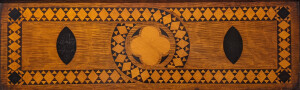 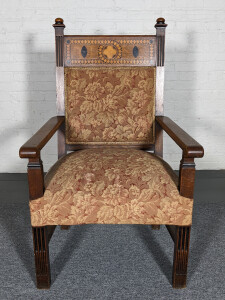 | SHORT DESCRIPTION: Upholstered armchair made by the Pottier & Stymus Company of New York for the steamboat Commonwealth. The chair was used in the Venetian Gothic saloon. The top rail has an inlaid design. The chair is currently covered in a floral fabric, looking at the original photographs of the saloon it has probably been reupholstered. NOTES: See the attached pamphlet by William King Covell, Wilkinson Press, Inc., Newport, Rhode Island, January 1955. The paper “The Steamer Commonwealth,” by Warren T. Berry and J. Howland Gardner, published by the Society of Naval Architects and Marine Engineers, New York, 1908, is the chief source of the notes in this leaflet. Information has been contributed by Elwin M. Eldredge and by other friends. This is the fourteenth of a series of leaflets devoted to steamboats of Long Island Sound. Four hundred copies were printed by the Wilkinson Press, Inc., of Newport, in the month of January 1955. See the attached article published in The New York Architect, published by The Harwell-Evans Company, New York, Vol. 2, July 1908, No. 7. It includes an editorial of the steamer Commonwealth and a discussion of the interior treatment, decoration and furnishing of the Commonwealth. It includes interior and exterior images of the boat and plans. NOTES: The Fall River Line was a famous and long-running passenger transportation service (1847–1937) that connected New York City and Boston via a combination of overnight steamboat travel along Long Island Sound (and Narragansett Bay) and rail connections. Passengers typically took a night boat from New York to Fall River, Massachusetts, then continued by train to Boston (or vice versa), making it a luxurious and popular "rail-water" route, especially during the Gilded Age. The company was founded by Richard Borden who began a regular steamboat service between New York City and Fall River in 1847 (the Bay State Steamboat Company/Bay State Line). In 1863 the Bay State Steamboat Company was sold to the Boston, Newport and New York Steamboat Company, and the railroad was extended between Fall River and Newport, Rhode Island. In 1869 the line was sold to the Narragansett Steamboat Company (Narragansett Steamship Company). In 1872 the Fall River Line was completely reorganized and became part of the Old Colony Railroad, under the name Old Colony Steamboat Company. In 1893, the Fall River Line became part of the New York, New Haven and Hartford Railroad (commonly called the New Haven Railroad). Under this railroad's influence, the steamboat operations (including the prominent Fall River Line) were reorganized and operated through the New England Navigation Company (organized January 1, 1905, the Fall River Line became a division in 1906). By the early 1910s (evidenced by references like 1913 stock certificates and reports), operations and marketing increasingly used New England Steamship Company (often abbreviated N.E.S.S. Co.). The shift to the new name likely occurred gradually between 1905 and 1910, with the name "New England Steamship Company" becoming the primary public and operational identity by the late 1900s/early 1910s. No single "renaming date" is pinpointed in primary sources, but the effective transition to the Steamship Company name for day-to-day branding and management was complete by around 1910–1912. The New England Steamship Company directly managed and marketed the Fall River Line's fleet of elegant side-wheel steamships (such as the Pilgrim, Priscilla, Puritan, Commonwealth, and Providence). After its employees went on strike in the middle of 1937, the company chose, in the face of ongoing losses due to land transportation, to liquidate rather than negotiate with the union. Vessels operated by the line: Bay State (1847), Massachusetts (1847), Empire state (1848), State of Maine (acquired 1849), Metropolis (1854), Old Colony (1865), Newport (1865), Bristol (1867, acquired 1869), Providence (1867, acquired 1869) Pilgrim (1883), City of Fall River (1883, freighter), City of Brockton (1886, freighter), Puritan (1889), Plymouth (1890; rebuilt 1906-1907), City of Taunton (1892, freighter), Priscilla (1894), Providence (1905), and Commonwealth (1908). VESSEL INFORMATION - VESSEL NAME: COMMONWEALTH VESSEL BUILT: 1908 SERVICE DATES: July 1, 1908-1937 VESSEL TYPE: SIDE-WHEEL STEAMBOAT SHIPBUILDERS: WILLIAM CRAMP & SONS BUILDERLOCATION: PENNSYLVANIA, PHILADELPHIA SHIP LINE: FALL RIVER LINE SHIP OWNER: NEW ENGLAND STEAM SHIP COMPANY VESSEL DIMENSIONS: 5,980 tons, 437'9" x 55' x 19'3" FATE: Scrapped in Baltimore, Maryland in 1938. VESSEL HISTORY: The Fall River Line became a division of the New England Navigation Company in 1906. [Description pulled from the Fall River Globe, June 23, 1908, page 8] The $2,000,000, four-decked, 456-foot long side-wheel steamboat Commonwealth was last vessel added to the line (1908). It was the largest of the sound steamer ever built (known as the ‘Giantess of the Sound’). Commonwealth’s interior decoration was created by Pottier and Stymus Company of New York and featured several different architectural styles, for example, a Louis XVI style dining room and the adjoining café in Italian Renaissance. The vessel could accommodate 2000. Some of the rooms “are of regal luxury, arranged in suites with baths.” The double-skilled hull was steel and divided into water-tight compartments. After of the lobby was a library, or social hall, fitted with mahogany bookcases decorated with gilded composition. The barber shop is in old ivory, gilded; the men’s café and the purser’s room off the quarter deck, are in oak ornamentation in color. The grand saloon in Venetian, Gothic vaulted, with artistic ornamentation and color decorations in each section of the vaulting. Aft of the grand salon and separated from by portieres is a Louis XV saloon in old ivory, and on the gallery deck above an Adams saloon in prima vera. Forward of the saloon deck is an Empire saloon in mahogany with gilded ornaments, and on the gallery deck a Louis XVI saloon in solid color with gilded ornamentations. The Commonwealth’s engines are of triple expansion inclined pattern, with no walking beam, with about 3000 horse-power. The paddle wheels are constructed with feathering buckets. On the night of September 26, 1908 the cargo ship Volund collided in dense fog with the Commonwealth off Race Rock off eastern Long Island, between Fisher’s Island and Plum Island. The Commonwealth rescued all 16 people from Volund. In a heavy fog in 1912, the Commonwealth rammed and badly dented the new armored dreadnaught New Hampshire. After the employees of the Fall River Line went on strike in the middle of 1937, the company chose, in the face of ongoing losses due to land transportation, to liquidate the company rather than negotiate with the union. The remaining vessels (Plymouth, Priscilla, Providence and Commonwealth) were sold for $88,000 and were towed to Baltimore and scrapped. | CL31342 | |||||||
| 39 | 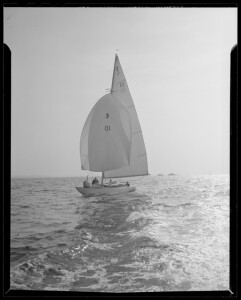 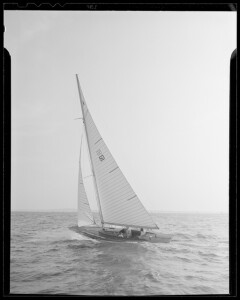  | 1939-1940 | Arizona (Battleship : BB-39)–Photographs.; Saint John (Passenger ship : 1920)–Photographs. | Yachts–Photographs.; Yachting–Photographs.; Yacht racing–Photographs.; Sailboats–Photographs.; Motorboats–Photographs.; Tugboats–Photographs.; 35mm cameras–Virginia–Newport News. | Contains photographic negatives of the International class vessel Brendy, the A class vessel Atlanta, unidentified woman aqua-planing, various unidentified boaters, three unidentified vessels at the Ira Bushey Incorporated pier, unidentified tankers, the tanker V L Keegan ,the tanker Hygrade, unidentified sailing and power vessels, the 12 meter vessel Vim and the 12 meter vessel Taygeta, the dreadnaught vessel Arizona, a portrait of an unidentified man, the USN vessel submarine chaser, the passenger ship Saint John, the fishing boat Catherine, the fishing boat Mary, and the tugboat Gareco. | P0002.001/50-142 | ||||
| 40 |    | 1945-1946 | University of Oxford–Photographs.; University of Michigan–Photographs.; Madame Tussaud's–Photographs.; Notre-Dame deReims (Cathedral)–Photographs.; Queen Mary (Turbo steamship : 1936)–Photographs.; West Point (Transport : AP-23)–Photographs.; Madison Square Garden (New York, N.Y.)–Photographs.; Caterpillar Tractor Company–Photographs.; Queen Elizabeth (Troopship : 1940)–Photographs. | Newburgh (N.Y.)–Photographs.; Reims (France)–Photographs.; Thames River (England)–Photographs.; Regensburg (Germany)–Photographs.; Windermere, Lake (England)–Photographs.; London (England)–Photographs.; St. Ives (Cornwall, England)–Photographs.; Liverpool (England)–Photographs.; Lynbrook (N.Y.)–Photographs.; Philippines–Photographs.; Strasbourg (France)–Photographs.; Rouen (France)–Photographs.; Torquay (England)–Photographs.; Hudson River (N.Y. and N.J.). Photographs.; Cleveland (Ohio)–Photographs.; New York (N.Y.)–Photographs.; Canterbury (England)–Photographs.; Jersey City (N.J.)–Photographs.; Moscow (Russia)–Photographs.; Sacramento River (Calif.)–Photographs.; San Francisco (Calif.)–Photographs.; Adirondack Mountains (N.Y.)–Photographs.; Windsor (N.Y.)–Photographs.; Milan (Italy)–Photographs.; Ridgefield (Conn.)–Photographs.; Golden Gate Bridge (San Francisco, Calif.)–Photographs.; Avignon (France)–Photographs.; Danube River–Photographs.; Kremlin (Moscow, Russia)–Photographs.; Bavaria (Germany)–Photographs. | Textile fabrics–Photographs.; Velvet–Photographs.; Dredges–Photographs.; Barges–Photographs.; Clocks and watches–Photographs.; Cotton–Photographs.; Cotton picking–Photographs.; Diamond jewelry–Photographs.; Pearl jewelry–Photographs.; Tankers–Photographs.; Transport planes–Photographs.; Fishers–Photographs.; Boaters (Persons)–Photographs.; Brewing–Photographs.; Breweries–Photographs.; Processions, Religious–England–Photographs.; Dinghies–Photographs.; Parrots–Photographs.; Fishing boats–Photographs.; Railroads–New York (State)–Photographs.; Indigenous peoples–Philippines–Photographs.; Enslaved persons–Photographs.; Wood-engraving–Germany–Photographs.; Wood-engraving–England–Photographs.; Taxidermy–America–Photographs.; Bas-relief–Egypt–Photographs.; Teddy bears–Photographs.; Passenger ships–New York–Photographs.; Horse-drawn omnibuses–Photographs.; Geese–Photographs.; Rugs, Persian–Photographs.; Mausoleums–New York–Photographs.; Cable cars (Streetcars)–San Francisco–Photographs.; Factories–Photographs.; Blue collar workers–Photographs.; Airships–Photographs.; Schooners–Photographs.; Steamboats–Photographs.; Stagecoaches–Photographs. | Contains photographic negatives titled Silhouette Sailor Watching Transport at Night in Dock, President Roosevelt portrait, President Truman & General Eisenhower Talking, Sateen Velvet Fabric closeup, Material or Fabric with Stripe, Large Dredge in a River Dumping into Barge, Lawn at Camp Robinson Crusoe with Trees & Nice Clouds, Girl's Hands on Harp, Girl Wearing Girdle & Bra with Arm Raised to Cover Face, C82 Packet Super Cargo Carrier Plane on Ground, 150 Watt Electric Mazda Light Bulb, River Basin & Shipping on the Danube Near Regensburg, Germany, Oxford University England, View Overlook Lake Windermere, Religious Procession in England, On the Thames Boatman in Rowboat, Porches & Balconies of London Apartment House, Parakeet White in Cage, Madame Tussauds Waxworks London, Fisherman & Boat at Dock at St. Ives, England, 3 British Workmen Figs & Heads, Long View of Liver House Liverpool, England, Closeup of Tower & Clock Above, Power Line TowerAlong Railroad Track, Modern Twin Lamppost on Peninsular Bend in Lynbrook, New York, View of Auto Post Lights Up When Hit by Lights, Man Using Power Lawnmower, Drama & Comedy Masks, Abacus Chinese Swan-Pan, American Opossum & Young on Back & Tail, Cathedral of Rems, France, Stone Cooking Pot & Onions & Frankfurters, Natives Baling Hemp Primitive Method, Albay Province, Philippine Islands, Native Woman Hand Stripping Hemp, Philippine Islands, Old German Woodcut of Ropemaker, Federal Theatre Project Photo of Backstage Showing Curtain Ropes, Old Engraving of Strasburg, France, Cathedral Rouen, France, King of England in Carriage, Audience in Theatre Applauding, Frosted Food Center Store in Lynbrook, New York, Typical British Rural Home, View of Lands End of Torquay, England, Old Central Norte F.C. & C & N Locomotive, Old Locomotive & Tender Side View P.O. Railroad, Old Locomotive Chinese Yueh Han Railroad, View of Hudson River from Plum Point Lawn, Double Highway on Route to Newburgh, New York, Main Street in Newburgh, New York Showing Hotel and Movies, Army & Navy Store Irv. Kaplan Sign, Old Office Building with Spencerian Business College at Newburgh, New York, Union Terminal Tavern & Railroad Station Cleveland, Ohio, On Rushing Locomotive Head On Pulling Train, Line Up Side by Side Head on of 5 Santa Fe Railroad Streamliner, Line up Side by Side Head on of 4 Steam Locomotives at Right, Electric Locomotive Hauling Gondola Car NYRH, Railroad Power Plant Capable of Generating Electricity for City of 10,000 People, Provelick Papers Engraving of Christmas in England, Ancient Egyptian Bas Relief Tablet, Toy Teddy Bear Seated Arms Out, Burling 5600 Locomotive on Turntable, Northern Pacific Railroad Eastbound on Siding for Westbound Train, CB & Q 5400 Diesel Pulling Oil Cars Sheep Horse Canyon, Wyoming, Can Pac Steam Draw Freight Train and Tracking, C & EI Tank Train Enginer Leaning from Cab, 3 N & W Locomotives Drawn Up Together, Twin City Zephyrs CB & Q Along Russ River, Can pac Railroad Freight Passing Under Viaduct, Queen Mary Passing Battery, New York with Troop and Tug, Hand Pulling Fire Alarm, Hedge Clippers Leaning Against Garage Door of New York City, Street Cars of 1903 Horse Drawn, Horse Drawn Carriages Driving in Central Park New York 1904, Gp Railroad & ER Railroad Company New York City Horse Car, Central Park Auto Bus About 1910, Old New York Horse Car Roosevelt Street Ferry Line, Market Scene Lower West Side Circa 1900 New York, Washington Street New York Locomotive & Engine Mat, Horse Car on West Street Traffic & Ship at Dock, Grand Street Ferry Horse Car, East Broadway 1907 Snow Plow & Trolleys in Sun, Congested Trucking Scene Lower East Side New York about 1910, View Over Barge Office & Battery 1915, Easter Sunday 1901 New York 59th Street Plaza at 5th Avenue, Marine Dredge at Work in River, 4 Masted Steel Hulled Schooner at Anchor Full On, Troop Transport West Point Docking with Returning Troops, Queen Mary & 14,000 Returning Troops Passing Battery Skyline, Girl on Rock Looking Over Lakes & Islands of Adirondacks, Liberty Ship Looms Up Through Fog, Finished Car Leaving Chevrolet Plant Inspector Marking OK on Windshield, Engraving of Queen Elizabeth I Portrait, Open Cigarette Case and Closed Leather Case, Line Up of Horse Carts at Horse Show Madison Square Garden, Main Street Newburgh New York Looking to Hudson River, Double Highway Looking Up Near Newburgh, 1 Story Country School House Winsor, New York, Exterior of Hebrew Synagogue, Newburgh, New York, Exterior of Welfare Department Building Newburgh, New York, School Ahead Slow sign, Goose Side View Wings Spread, Goose Side View On Lawn Just Standing, Engraving Entrance to Great Bazaar at Ishapan, Persia from Harper's Magazine, Portion of Persian Rug Circa 1600 AD, Ancient Mural of Egyptian Women & Oil Beauty & Restaurant, View Looking Down on Road from Fairview Mauseoleum, Entrance to Fairview Mausoleum, New york, Canterbury Cathedral, England, Journal Square Jersey Journal Building at Right, Full View of Persian Orial Rug, Mural of Egyptian Heiroglyphics, Croseus on the Funeral Pyre, 2 Couples After the Theatre of 1890 Using a Chafing Dish, Kremlin in Moscow Tower of Ivan the Great Great Bell at Foot, Cathedral Milan, Italy, Engraving of French or Italian Maid With Parasol About to Descend Step, Engraving of Winter Scene Carts of Road River at Right, Fluted Colemns at Persepolis, Ancient Persia, Roman Home Scene Baby on Floor, Egyptian Paintings on Wall, Road Intersection Hudson Boulevard North Bergen, New York, Armour Soap Works in Jersey Swamp, Caterpillar Tractor Company Works Peoria from Air, Industrial Rayon Corp. Plant Plainsville, Ohio from Air, Hands of Draughtsman with Drawing Pantograph, View Down on Hoboken Docks & Fletcher Company Drydocks New Jersey, river Steam Paddle Wheeler on Sacramento River, California, Shooting of Mayor 1910 New York Mayor, Night View of Locomotice Lighting Up track Ahead, Wedding in Church Bride and Groom at Altar, Wedding in Church Couple in Aisle Before Altar, Bridal Couple in Car with Rice about to Drive Away, Old Engraving from British Sports Manual of Staghounds Running & Horses & Riders in Rain, Old New York Engraving Custom House & Wall Street New York Hawk or Falcon Approaching, Old New York engraving Custom House & Wall Street New York with People Promenading, Case Reaper Drawn by Tractor Cutting Grain, Corn Binder Dropping Corn into Wagon, Elderly Man Using Draghting Instrument at Work on Plans, Cotton Gin View Down Room Between Two Rows of Machines, Trust Company of New Jersey Building & Fox State Movie Sign, Overhead Railroad Crossing of Railroad Tracks New Jersey, View Through One Transmission Line Tower Down Line of Them New Jersey Meadows, Little Sharps at Fireworks Factory New Jersey, View Through One Transmission Line Tower Down Line of Them New Jersey Meadows, Ascot Races Egland Grand Stands & Enclosure, Ship Square-Rigger Under Sail in Heavy Sea taken Water over her Deck, Ship Imperator Alexander, View of Rear of Cathedral of Saint John the Divine from Over Park, Mansion & Lawn at Plum Point, New York, Fieldstone Bungalow Near Newburgh, New York, Blue Persian Kittens on Toy Gate, Pennsylvania Railroad Box Car in Front of Stone House, Ripples in Pool at Sunset Dark Shore Outline in Background, Clouds High in the Air from Above, Roaring Rapids in River Little Fork River in Minnesota, Photo of Glass Goblet Marina, Street of Homes in Ridgefield, Connecticut, Men & Women Seated in Hall from Rear Attending 1st Class, Looking Down on Man Seated at Draughting Board Using Universal Draghting Machine, The March Trotter Engraving of Jockey on Trotting Horse, Engraving of Steeple Racer Taking Water Jump, Looking Down on head of Draughtsman at Drawing Board with Universal Draghting Machine, Grandfather's Clock Chinese Decorations from W&J Sloane Company, Old English Sporting Engraving, Old English Engraving two Horses Pulling Cart, Old English Engraving Hunter & Rider Taking Fence, Frigidaire Operating Metal Cooling Box, Workman Pouring Melted Aluminum in Mold, Workman Pushing Handtruck with Castings, Modern Factory Building with Cars Before It, Unloading Glass Sand from Freight Car, 2 Men in Office in Factory at Blue Print Machines, 3 Vertical Transformers in a Factory, Man Alongside Gas-Fired Oven in Factory, Hospital Bed in a Room at Factory, Dynamo & Electric Motor on Concrete Base, Men at Work in Factory on Vacuum Cleaners, King John Signing the Magna Carta engraving, Pocahontas Saving Captain John Smith from Indians engraving, Henry II of France & Duke Montgomery of Scotland in Tournament engraving, Knights on Horses in Armour Tilting Contest engraving, Portrait of Christopher Columbus, Portrait of Catherine de Medici in COurt Dress, Portrait of Marco Polo, Portrait of King Henry VIII of England, Portrait of Queen Isabella of Spain, Portrait of John Gutenberg, 2 Knights Crusaders engraving, Signing of the Mayflower Compact engraving, Place d'Armes New Orleans, Louisiana, Hands Holding Metal Platter of Steak & Veggies, Main Financial Street Memphis, Tennessee, Interior of Modern Kitchen Showing Stove & Sink & Breakfast Nook Through Door, Lumber Raft on Klamath Lake, Oregon, Molde Norway Church Steeple Burning After Hit by German Bomb, Deck of Queen Elizabeth Crowded with Returning Soldiers, Hands of Girl Holding Deck of Cards, General View of a Banquet, Cleaning Master Rods with Oil Spray Gun in Spray Booth, Electrician in Plant with Cart & Gear, Electrical Maintenance Crew Using Greenlee Pipe Bender, Cleaning machine for Removing Oil & Dirt from Mechanical Parts in Airplane Motor Plant, Cleaning Man Using Brush to Sweep Floor in Factory, Mill Wright and Crew Moving Drill Press, Laundry Machine for Cleaning All Sizes of Mechanical Parts in Airplane Motor Plant, Wilbur & Orville Wright with Early Model Baby Wright Racer Plane, Drying Paint on Auto Bodies in Infra-red Tunnel, San Francisco Oakland Bay Bridge at Sundown, Cable Cars Passing Each other on Hill in Sanfransisco Direction of Chinatown & Bar Bridge, Golden Gate Bridge San Fransisco, Closeup of Sisal Plant Agave Sisalana, A Sisal Plantation Rows of Plants, 16th Century Venetian Art brocade Tapestry, Currier & Ives Engraving of Clipper Ship Dreadnaught, American Clipper Great Republic from Engraving in Illustrated London News, Early Photo of Whaler, Engraving of California & Oregon Stage Company Stage Coach, Engraving of Early American Stage Coach Mansion on Hill in Background 4 Horses, Early Photo of Stagecoach 3 Horses on Road in West, Wells Fargo Stage Coach on Road, US Troops & Train at Avignon, France, Bow View of Transport at Sea with US CT, Parthenon-like Building in Bavaria, Arc du Carrousel Paris, Statue of Jeanne d'Arc Reims, France, Flying Buttress on Notre Dame Cathedral Paris, Assortment of Fancy Glass Liquor Bottles, Pioner Fishing Seiner Underway, Quick Freeze Food Lockers Counter and Butchers, All Over Black Pattern of Snowflake Crystals, Bok Tower Lake Whales, Florida, Aurora Borealis Diagonally Across Sky Lower Left to Upper Right, natives Cutting Sisal Plants for Hemp, USS Midway Carrier Passing Troopship at Sea, Old Print of Coaching Scene in England, Old Engraving of Aurora Borealis, and Booth Mills Lowell, Massachusetts Looms in Cotton Mill. | P0002.001/50-149 |
Created 2026 by Don Barker, CBMM volunteer, for the Chesapeake Shipbuilding Project. shipbuilding@sailingworkboats.es